Generated research is in English. Navigation and controls follow your selected language.
Home care accessories — Opportunities in United Kingdom
Home care accessories · United Kingdom
Ideas are starting points, not verified demand, buyers, budget fit, profit or product approval. AI scores are assessments, not measured market evidence.
Shortlist overview
The UK is a mature, cost-conscious e-commerce market where energy-saving and home-care convenience products are gaining traction. Evidence shows strong demand for energy-efficient appliances and accessories, smart home devices, and home wellness items, but competition is intense on Amazon and eBay. For a marketplace-first importer with a sample-first approach, low-commitment, lightweight home-care accessories offer the best balance of demand, manageable import barriers, and testability. However, no personal budget was supplied, so all cost and margin figures are indicative and must be validated against actual quotes and sales data.
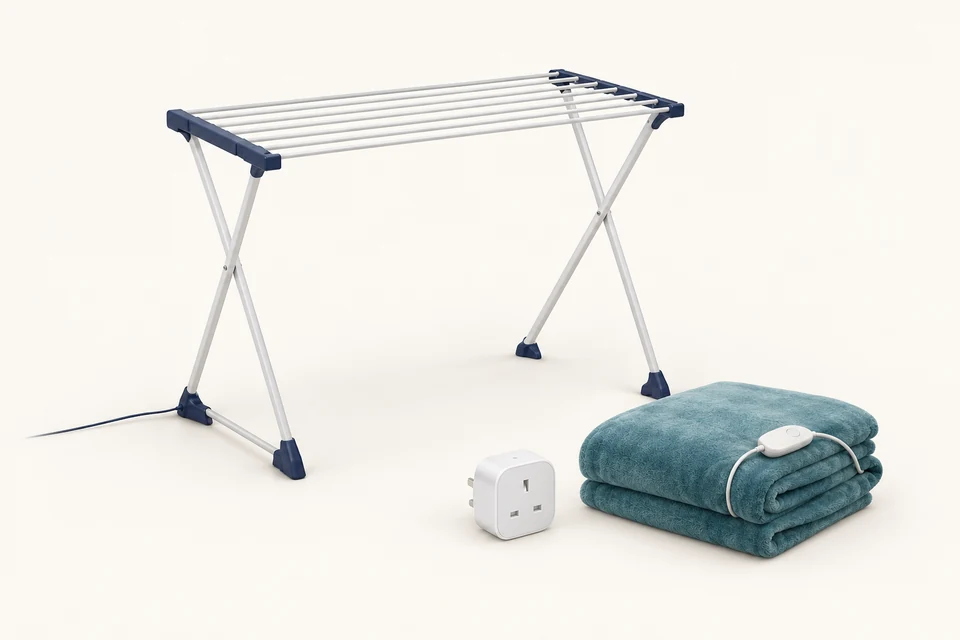
Heated airers (electric clothes drying racks)
UK shoppers are explicitly chasing cost savings, and heated airers are cited as cheaper to run than tumble dryers in winter. They are lightweight, easy to ship, and can be tested with small sample orders on Amazon or eBay. The category has moderate competition but room for differentiation on safety features and energy labelling.
First step: Source 3–5 sample units from Alibaba suppliers with UKCA marking and test sell on eBay or Amazon to gauge demand and return rates.
Product ideas
Heated airers (electric clothes drying racks)
Home care / laundry accessories
AI opportunity assessment: 8/10
Cost-of-living pressure is driving UK consumers toward energy-saving laundry alternatives; heated airers are highlighted as cheaper to run than tumble dryers.
Evidence and competition
Demand: Skailama (2026) lists heated airers among trending energy-saving products, citing Ofgem's January 2026 state-of-market report that cost-saving is the number one driver for UK shoppers.
Competition: Medium Several brands sell heated airers on Amazon UK, but differentiation via safety certifications, energy labelling, and design is possible.
Costs, barriers and sourcing
Import barriers: Medium Electrical product requires UKCA marking and compliance with electrical safety regulations; plug type must be UK 3-pin.
Estimated entry cost: £1,500–£3,000 for 100–200 units including shipping and duties (indicative, based on typical MOQs for small appliances).
Indicative margin: 30–45% gross margin Estimated from typical retail markups on Amazon UK for similar home appliances, assuming landed cost per unit of £15–£25 and retail price of £35–£50.
Sourcing: Sourced from Chinese manufacturers on Alibaba; MOQs often 100–500 units. Request UKCA certification and test samples.
Watch out: Electrical safety and liability; returns due to damage in transit; seasonality (higher demand in winter).
Next step: Run Market Research on heated airers in the UK to confirm search volume and competitor pricing.
Opens a prefilled form. Research starts only after you submit.
Smart plugs with energy monitoring
Smart home / energy saving
AI opportunity assessment: 7/10
UK consumers are increasingly adopting smart home devices to monitor and reduce energy use; smart plugs are a low-cost entry point.
Evidence and competition
Demand: Skailama (2026) reports smart energy and lighting product appeal grew from 36% (2019) to 41% (2024), and lists smart plugs and energy monitors as strong sub-categories.
Competition: High Dominated by established brands like TP-Link, Amazon, and Philips Hue; new entrants need strong differentiation or lower price.
Costs, barriers and sourcing
Import barriers: Medium Requires UKCA marking, compliance with radio equipment regulations (RED) and electrical safety; app compatibility and data security concerns.
Estimated entry cost: £800–£1,500 for 200–500 units including shipping and duties (indicative).
Indicative margin: 25–35% gross margin Based on typical Amazon UK pricing for unbranded smart plugs (£8–£15 retail) and landed cost of £4–£7 per unit.
Sourcing: Widely available from Shenzhen manufacturers; MOQs as low as 100 units. Ensure CE/UKCA and RoHS compliance.
Watch out: High competition and price pressure; technical support and app updates required; potential for high returns if quality is poor.
Next step: Run Market Research on smart plugs with energy monitoring in the UK to assess review sentiment and price gaps.
Opens a prefilled form. Research starts only after you submit.
Electric blankets (heated throws)
Home care / bedding
AI opportunity assessment: 7/10
Rising heating costs are pushing consumers to seek personal heating solutions; electric blankets are a cheaper alternative to heating entire rooms.
Evidence and competition
Demand: Skailama (2026) lists electric blankets among trending energy-saving products, noting they are cheaper to run than tumble dryers in winter.
Competition: Medium Several established brands (e.g., Dreamland, Silentnight) but space for budget-friendly options with safety features.
Costs, barriers and sourcing
Import barriers: Medium Electrical safety and UKCA marking required; must comply with UK electrical equipment regulations.
Estimated entry cost: £1,000–£2,000 for 100–200 units including shipping and duties (indicative).
Indicative margin: 30–40% gross margin Estimated from retail prices of £25–£40 and landed cost of £10–£15 per unit, based on typical Alibaba quotes.
Sourcing: Chinese manufacturers offer various sizes and features; MOQs around 100–300 units. Request UKCA and safety test reports.
Watch out: Seasonal demand; safety concerns (overheating, fire risk); returns due to defects.
Next step: Run Market Research on electric blankets in the UK to identify top-selling features and price points.
Opens a prefilled form. Research starts only after you submit.
Smart thermostats (compatible with UK heating systems)
Smart home / energy saving
AI opportunity assessment: 6/10
Smart thermostats are a key energy-saving device, but the market is dominated by established brands; opportunity lies in budget or niche compatibility.
Evidence and competition
Demand: Skailama (2026) lists smart thermostats (Hive, Nest, Tado) as a strong demand sub-category, driven by cost-saving motives.
Competition: High Brands like Hive, Nest, and Tado have strong UK presence and brand loyalty; new entrants face high barriers.
Costs, barriers and sourcing
Import barriers: High Requires UKCA marking, compliance with radio and electrical regulations, and often boiler compatibility certification; installation complexity.
Estimated entry cost: £2,000–£4,000 for 100–200 units including shipping and duties (indicative).
Indicative margin: 20–30% gross margin Based on retail prices of £100–£200 and landed cost of £60–£100 per unit, but margins squeezed by competition.
Sourcing: Chinese manufacturers offer smart thermostats, but UK compatibility (e.g., boiler systems) is critical; MOQs 100+.
Watch out: High competition, technical support burden, and potential liability if heating systems malfunction.
Next step: Run Market Research on smart thermostats in the UK to assess compatibility requirements and competitor reviews.
Opens a prefilled form. Research starts only after you submit.
Video doorbells (budget, UKCA-certified)
Smart home / security
AI opportunity assessment: 6/10
Home security and convenience drive demand for video doorbells; budget alternatives to Ring and Arlo may find a market.
Evidence and competition
Demand: Skailama (2026) lists video doorbells and smart cameras (Ring, Arlo, Eufy) as strong demand sub-categories.
Competition: High Dominated by Ring, Arlo, Eufy; new entrants need aggressive pricing or unique features.
Costs, barriers and sourcing
Import barriers: Medium UKCA marking, radio equipment regulations, and data privacy compliance (GDPR) for video storage.
Estimated entry cost: £1,500–£3,000 for 200–400 units including shipping and duties (indicative).
Indicative margin: 25–35% gross margin Based on retail prices of £30–£60 and landed cost of £15–£25 per unit.
Sourcing: Shenzhen manufacturers offer various models; MOQs 100–500. Ensure cloud storage and app are GDPR-compliant.
Watch out: High competition, data privacy risks, and technical support needs.
Next step: Run Market Research on video doorbells in the UK to identify price gaps and feature demand.
Opens a prefilled form. Research starts only after you submit.
Validation and next steps
- Source and test 3–5 samples of each shortlisted product; evaluate quality, safety, and packaging.
- List samples on eBay or Amazon as test listings to gauge demand, conversion, and return rate.
- Check UKCA marking and compliance requirements for each product via GOV.UK guidance.
- Analyse competitor reviews on Amazon UK to identify common complaints and differentiation opportunities.
- Calculate landed cost per unit including shipping, duties, and VAT; validate against target retail price.
Ideas to approach cautiously
- Secondhand and resale fashion — Requires sourcing used goods, authentication, and handling returns; not suitable for a new importer and highly competitive with Vinted and Depop.
- Pet supplements — Regulated as veterinary medicines or feed additives; requires licences and compliance, high liability.
- Private label skincare — Cosmetic products require CPSR (Cosmetic Product Safety Report) and Responsible Person compliance; high regulatory burden and crowded market.
- Large kitchen appliances (fridges, dishwashers) — High shipping costs, bulky logistics, and intense competition from established brands; not suitable for sample-first approach.
Sources and limitations
Automatically published AI-generated ideas, not verified demand, confirmed buyers, personal advice or a promise of profit. Sources may be incomplete, outdated or inaccurate. Verify findings before spending money.
Costs, margins, scores and import requirements are indicative assumptions, not supplier quotations or validated budget fit. Validate exact products, compliance, current prices and fees before ordering.