

Canton Fair preparation
What to Wear to Canton Fair: A Practical Buyer's Guide
A complete buyer's guide to fair-day clothing, covering walking shoes, breathable layers, business-casual meetings, bags, rain, air conditioning, factories, and the return journey.
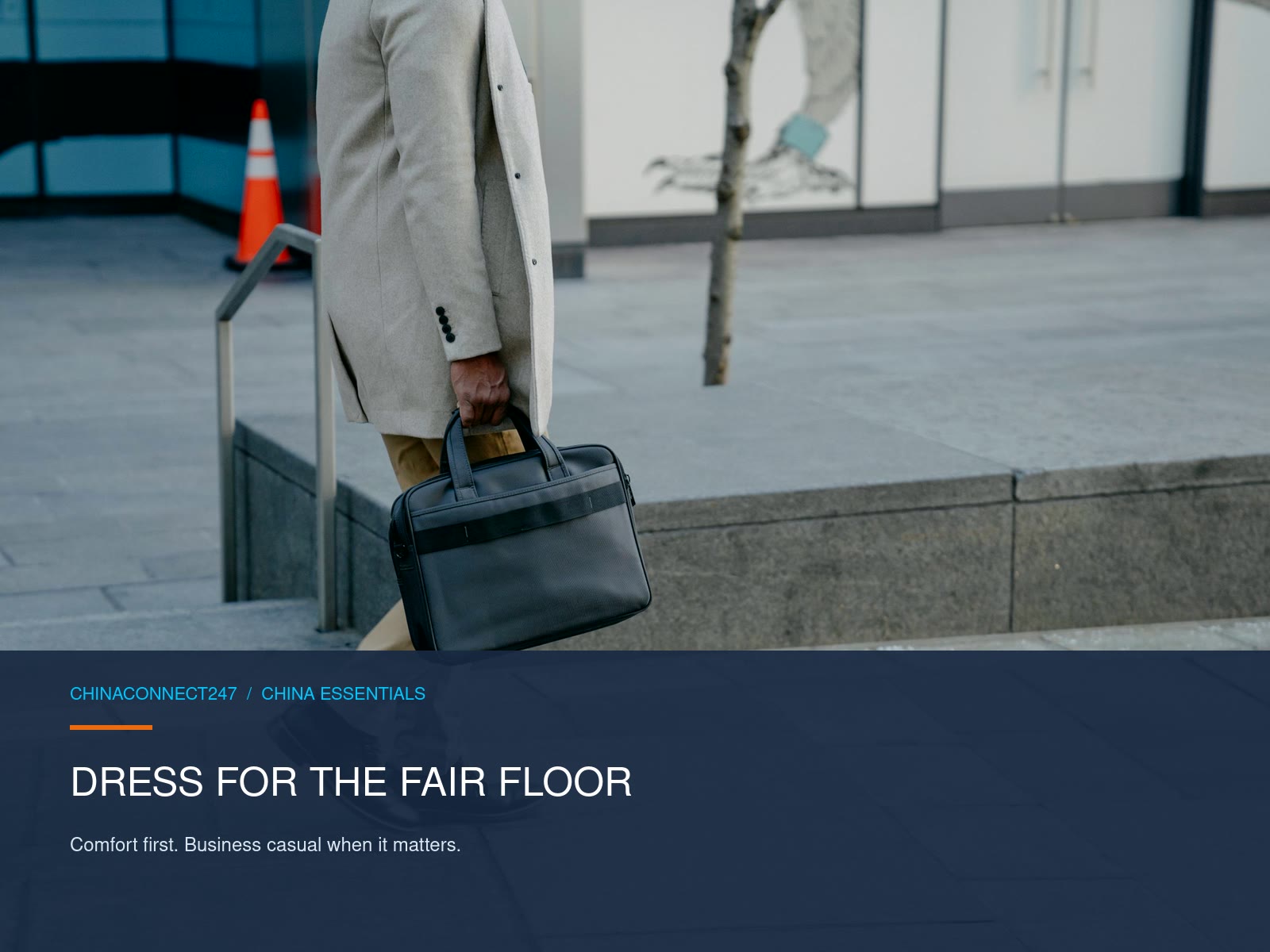
A Canton Fair outfit has two jobs: keep you comfortable while walking and help you move naturally into a serious business conversation. The best choice is usually practical rather than formal - broken-in footwear, breathable layers, a useful bag, protected business cards, and enough weather preparation for the season. Your outfit should support the work of the day, not compete with it.
Quick answer
Wear broken-in walking shoes, breathable clothing, and a neat business-casual layer that works for supplier meetings. Carry a light bag that leaves your hands free, protect your cards and documents from rain, and keep a jacket or overshirt available for strong air conditioning. Choose comfort first, then add a polished layer when the meeting calls for it.
The rule: comfortable enough to keep thinking
The Canton Fair is a working environment with long corridors, crowded aisles, standing conversations, transport transfers, and repeated movement between halls. The right outfit lets you stay attentive after several hours. If clothing causes blisters, overheating, restricted movement, or a heavy bag, it reduces the quality of your supplier conversations and notes.
You do not need a formal suit for every fair day. Clean, comfortable, presentable business casual is usually a more useful baseline. Add formality when you have a scheduled meeting, a factory visit, or a buyer event that requires it.
1. Start with broken-in walking shoes
Wear shoes you have already tested for a full day. Cushioned trainers, supportive walking shoes, clean low-profile shoes, or comfortable loafers can work depending on your style and meetings. Avoid new shoes, hard soles, unstable heels, or footwear that has not been tested on long walks.
Pack blister protection and consider a spare pair of socks, especially for a multi-day visit. Shoes that felt fine in the hotel may feel very different after a full route through several areas. If you plan to visit a factory, warehouse, or showroom, choose closed-toe shoes with enough grip and protection for the environment.
2. Dress for humidity and air conditioning
Guangzhou conditions can feel warm and humid, while halls, hotels, metro trains, and meeting rooms may be strongly air-conditioned. Use breathable fabrics and layers that can be removed or packed. A practical combination is a clean shirt or neat top, comfortable trousers or smart jeans, and a light jacket or overshirt.
Check the forecast before leaving each morning. A light rain layer or compact umbrella can protect your documents and electronics when weather changes. Avoid wearing an outfit that becomes uncomfortable when damp or makes it difficult to move quickly between entrances.
3. Use business casual as the meeting default
Suppliers are likely to remember whether you were prepared, clear, and respectful more than whether you wore a highly formal outfit. Aim for clothing that is clean, neat, and easy to move in. A collared shirt, knit polo, neat blouse, overshirt, smart trousers, or clean dark jeans can all work when paired thoughtfully.
For a more formal meeting, keep a lightweight jacket or structured layer in your bag. That gives you flexibility without carrying a second full outfit. Avoid very loose sleeves around machinery, samples, or crowded stands, and choose clothes that let you sit, stand, and reach your phone comfortably.
4. Choose a bag that supports the route
A light backpack or cross-body bag can carry cards, notes, water, a power bank, and a small document sleeve. Keep the bag small enough to move through busy aisles and security checks. A large suitcase or heavy sample case is tiring and may be inconvenient in crowded transport.
Use separate sections for:
- Passport and badge.
- Your business cards and supplier cards.
- Phone, power bank, and cable.
- Notebook and pen.
- Quotations, certificates, and other documents.
- Water and a small snack where venue rules permit.
Keep received cards and documents away from drinks. A rigid card case and a waterproof document sleeve can prevent a small spill from becoming a lost lead.
5. Make the outfit camera and note friendly
You may need to photograph booth numbers, company signs, product labels, packaging, certificates, quotations, and samples. Keep your phone easy to reach without placing it in an insecure outside pocket. Leave one hand free when possible so you can greet people, hold a sample, or write a quick note.
Ask before photographing people or confidential documents. If a supplier points to a product while explaining it, write the model number immediately. Clothing with practical pockets helps, but do not keep passports or other sensitive documents in an open pocket.
6. Prepare for several kinds of weather
Hot and humid days
Choose breathable layers, comfortable socks, and a light bag. Carry water and take short cooling breaks before fatigue affects your conversations. Sweat can damage paper cards and documents, so use a card case or sleeve.
Rainy days
Use a compact rain layer or umbrella and keep documents inside a waterproof sleeve. Protect the phone and power bank before leaving the hotel, not after the first downpour. Wear shoes that remain stable on wet pavement and allow extra time for slower walking and transport queues.
Cooler or heavily air-conditioned interiors
Carry a thin layer that can be removed when you leave the hall. A jacket that folds easily is more useful than a heavy coat that occupies the entire bag.
7. Pack for the meeting after the fair
Some buyers go from the exhibition to a restaurant, hotel meeting room, factory, or showroom. Wear an outfit that can move between those settings. Keep a clean layer or overshirt available and avoid clothing that looks appropriate only for walking or only for a formal dinner.
For a factory or warehouse visit, prioritize closed-toe shoes, comfortable movement, and clothing that is not loose around equipment. Follow the host's safety instructions and do not assume an exhibition outfit is suitable for every production environment.
8. Keep business cards and documents presentable
Carry your own cards in a protected case and keep received supplier cards separate. Your card should include your name, company, role, email, phone, website, and address where possible. A damp or bent card is harder to scan and easier to misplace.
Use a small sleeve for quotations, certificates, and product sheets. Photograph or scan important documents only with permission, then label them with the supplier and booth number. Clothing and bag choices matter here because they help you protect the evidence collected during the conversation.
What to avoid
Avoid brand-new footwear, heavy bags, restrictive tailoring, fragile accessories, loose scarves near samples or equipment, and an outfit that requires constant adjustment. Do not carry more printed material than your route can support. Ask suppliers to send structured information electronically when appropriate.
Avoid assuming that a formal suit will create trust by itself. A prepared buyer who asks precise questions, listens carefully, and follows up clearly makes a stronger impression than a buyer who is uncomfortable and distracted.
A practical morning check
Before leaving the hotel, walk for a minute in your shoes, check the weather, charge your phone and power bank, pack water, protect your cards and documents, and confirm that your clothing works with your bag. If you have a meeting, add the light layer or jacket you may need.
Before leaving the venue, check your battery, review whether documents are dry and secure, and decide whether the return route needs extra time. The day does not end at the final booth; you may still need to walk to a station, wait for a taxi, or stand in a crowded transfer area.
A good Canton Fair outfit is quiet infrastructure. It protects your attention, evidence, and energy so you can keep talking when the day is longer than expected.
Sources and evidence
Open the original publications and product references used in this article.
Keep the context with the contact.
Save supplier cards alongside products, quotes, questions, samples, and the next action.