

Canton Fair preparation
10 Things You Should Carry Every Day at Canton Fair
A complete ten-item daily packing guide for buyers who need to protect access, identity documents, phone power, supplier evidence, communication, and notes throughout the fair.
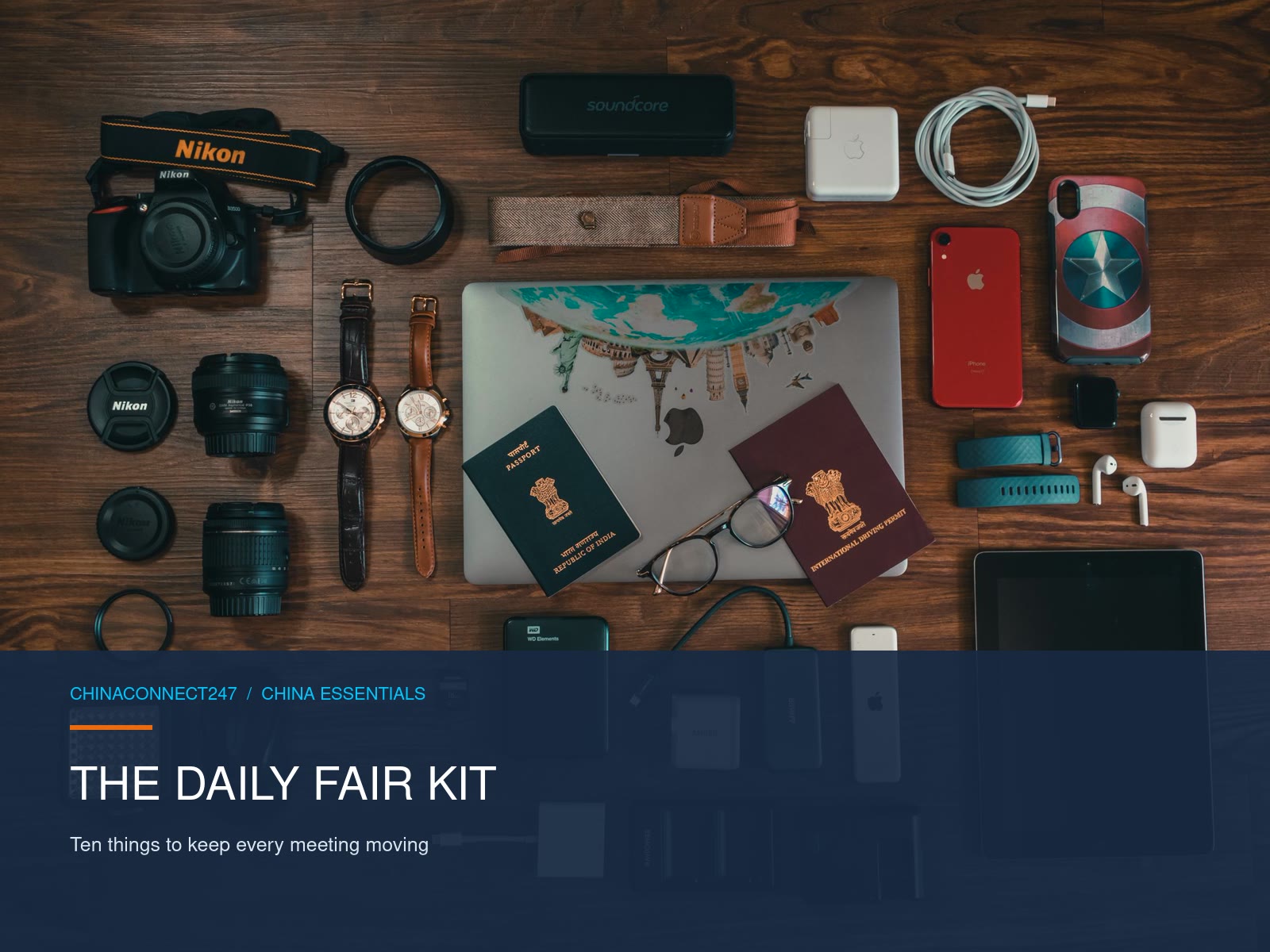
The best daily kit is small enough to carry comfortably but complete enough to protect your access, communication, and supplier records. Pack the same essentials in the same sections every night so nothing important disappears in a busy morning. The ten items below cover the practical failure points buyers face most often: lost documents, dead batteries, mixed-up cards, missing booth context, and a route that changes during the day.
Quick answer
Carry your original passport when the current badge rules require it, plus a copy, badge, phone, power bank, charging cable, business cards, notebook, translation and map tools, water, and a prioritized supplier list. Keep digital backups of critical documents, separate access items from drinks, and check the current venue restrictions before travelling.
The ten things
1. Passport and a backup copy
Carry the original passport or qualifying travel document used for buyer registration when the current official instructions require it. Keep a printed or offline digital copy of the information page in a separate place. The copy is a backup, not a replacement for the original at a badge counter or official identity check.
Protect the passport from drinks, rain, and loose pockets. Do not leave it at a supplier booth, hotel reception, or in an unlocked bag. If you need to share identity information for an official process, use the official channel and understand what is being requested.
2. Buyer badge and registration proof
Keep the badge secure and accessible. Save the QR code, receipt, or registration confirmation offline in case the network is slow. If you still need to collect the badge, carry the documents required by the current official buyer guide and schedule extra time.
Use the same storage place every day. After pickup, check the name and details on the badge before leaving the counter. If it is lost or damaged, use the official replacement process rather than accepting help from an unverified seller.
3. Phone with the right tools ready
Your phone is your map, camera, translator, calendar, contact book, and note system. Charge it before leaving. Keep the official fair information, map tools, camera, translation app, calendar, and supplier shortlist easy to reach.
Turn on the security and backup settings you normally trust. Clear enough storage for product photographs and keep the camera lens clean. Photograph the booth number before the product so every image has context.
4. Power bank
A dead phone can mean lost booth photos, missed messages, no translation, and no route. Carry a reliable, fully charged power bank that is permitted for your transport and follow any airline or venue rules about battery capacity. Keep it in an accessible pocket and test it before the fair.
Do not wait until the battery is at one percent. Recharge during lunch or a planned break so the phone remains available for the afternoon route and the return journey.
5. Charging cable and suitable adapter
Bring the cable that matches your phone and a compact charging adapter when useful. Test the cable before travelling. A cable that only works at a particular angle is not a plan.
Keep the cable with the power bank and avoid placing it loose among business cards or documents. If you use several devices, label the cables or carry one tested multi-device cable that you know can charge the equipment you actually bring.
6. Business cards
Carry your own cards in a protected case and keep received supplier cards separate. Include your name, company, role, email, phone, website, and address where possible. A clear card gives the supplier context and makes follow-up easier.
When you receive a card, write the booth number, product, and next action on the back or in your note system immediately. Do not rely on a large unlabelled stack at the end of the day. If you scan cards, check the scan while the person and conversation are still fresh.
7. Notebook and pen
Digital notes are useful, but a small notebook is valuable when your phone is busy, a table is crowded, or a supplier points to a sample while speaking. Use one repeatable template:
- Date, area, hall, and booth.
- Company, contact name, and role.
- Product or model.
- MOQ, quantity, price basis, and lead time.
- Evidence shown or documents requested.
- One unresolved question.
- Next action and deadline.
A notebook should support the digital record, not become a second disconnected filing system. Photograph the page or enter the important points before the evening review.
8. Translation and communication tools
Keep your preferred translation app, saved product terms, pronunciation help, and a short explanation of what you are sourcing. Download language packs if the app supports offline use, then test them before leaving. Do not assume an app will work in a crowded hall or when your data connection is weak.
Use written quantities, model numbers, measurements, and clear product photographs to reduce misunderstandings. For critical specifications, ask the supplier to send the final information in writing. Translation can support a conversation, but it is not independent confirmation of a legal, quality, or technical claim.
9. Water and a small snack
A fair day can be longer than the distance between two meals. Carry water and a small snack where venue rules permit. Keep drinks in a closed bottle and away from passports, cards, quotations, and electronics.
Take a short break before fatigue turns a useful conversation into a rushed one. Buy food from appropriate locations and follow the venue's current rules. A snack is not a substitute for planning lunch, but it can prevent an avoidable gap while you move between areas.
10. A prioritized supplier and meeting list
Keep the day's route, area, hall, booth, supplier, contact name, meeting time, and key question in one place. Mark priority suppliers, comparison stops, and optional discoveries. A short list helps you drop low-value detours when queues or conversations run long.
Before leaving the hotel, confirm the first route and one backup stop. At lunch, cross off completed meetings and move missed priorities to a realistic afternoon window. Before leaving the venue, confirm that every priority supplier has a booth record, card, photo context, and next action.
Organize the kit into three groups
Use three simple sections:
- Access: passport, copy, badge, and registration proof.
- Communication and power: phone, power bank, cable, adapter, and translation tools.
- Supplier capture: business cards, notebook, pen, and supplier list.
Keep access documents separate from water. Put cards and paper in a sleeve. Keep power items in an outer pocket. This organization makes the morning faster and reduces the chance of handing a supplier your passport when you meant to hand over a business card.
The five-minute evening reset
Before sleeping, recharge the phone and power bank, replace the cable, review the next day's phase and hall route, remove loose cards from your pockets, and back up important photos and notes. Put the passport and badge in the same protected section. Refill water and restock cards.
Review whether each useful conversation has:
- A booth number or company sign photo.
- A matched business card or contact record.
- The product model and key commercial details.
- An unresolved question.
- A clear next action.
This small reset is where a bag of objects becomes a sourcing system.
What not to overpack
Do not carry every printed catalogue, unnecessary valuables, a large amount of cash, or a heavy sample case unless the route requires it. Ask suppliers to send structured product information electronically when appropriate. A lighter bag helps you move, listen, and record decisions.
Check current venue, airline, metro, and security rules for restricted items. Keep liquids, batteries, documents, and samples packed in a way that can be inspected without unpacking your entire bag.
The list is simple, but it protects the parts of the fair day buyers most often lose: access, identity, battery, contact details, product context, and the next step.
Sources and evidence
Open the original publications and product references used in this article.
Keep the context with the contact.
Save supplier cards alongside products, quotes, questions, samples, and the next action.