Product × market / research brief
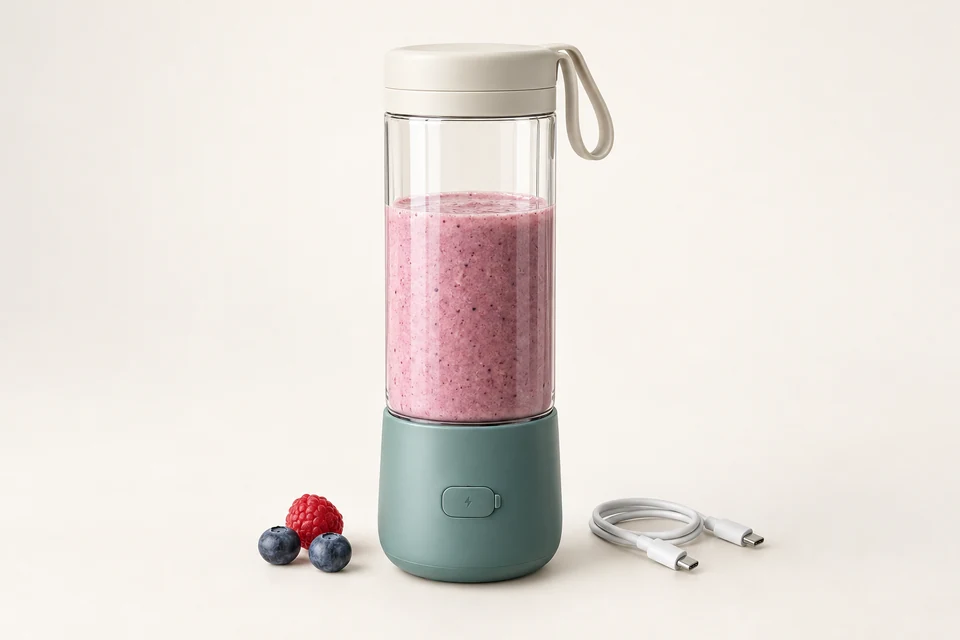
Portable blenders (USB-rechargeable, 400-600ml) — Australia
Entry verdict
TEST
Demand is real and growing, but the market is crowded with low-cost imports and the critical certification (electrical safety) is unverified in the evidence, so a small test order is the prudent first step.
Market opportunity
Score out of 10
Entry feasibility
Score out of 10
C
Evidence grade
Confidence limits the decision
Opportunity describes demand; feasibility describes entry conditions. Neither is a guarantee. Saved outlook: Solid Market.
01Customers & product fit
Customers & product fit
Possible customer organisations, needs and buying expectations.
Buyer expectations
| Expectation | Importance | Note |
|---|---|---|
| Expectation Durable and powerful motor | Importance Must-have | Note Consumers expect efficient blending of ice and frozen fruit. |
| Expectation Long battery life | Importance Must-have | Note At least 15-20 blends per charge; USB-C fast charging preferred. |
| Expectation BPA-free materials | Importance Must-have | Note Health and safety concern; glass jars are premium. |
| Expectation Easy to clean | Importance Nice to have | Note Self-cleaning or dishwasher-safe parts add convenience. |
Possible customer organisations — not confirmed interested buyers
| Company | Type | Why Fit | Role To Target | Priority | Website |
|---|---|---|---|---|---|
| Company Blendaco | Type Online retailer (own brand) | Why Fit Already sells a USB portable blender in Australia; potential competitor or partner for distribution. | Role To Target Founder / Buyer | Priority B | Websitehttps://blendaco.com.au/ |
| Company Blendy Australia | Type Online retailer (own brand) | Why Fit Sells portable blenders; could be a competitor or acquisition target. | Role To Target Founder | Priority B | Websitehttps://blendy.com.au/ |
| Company Amazon.com.au | Type Marketplace | Why Fit Major channel for portable blenders; allows direct-to-consumer sales. | Role To Target Vendor Manager (Home & Kitchen) | Priority A | Websitehttps://www.amazon.com.au/ |
| Company eBay Australia | Type Marketplace | Why Fit Active listings for portable blenders; low barrier to entry. | Role To Target Category Manager | Priority A | Websitehttps://www.ebay.com.au/ |
| Company JB Hi-Fi | Type Retail chain | Why Fit Major electronics retailer; could stock portable blenders if certified and branded. | Role To Target Buyer (Small Appliances) | Priority C | Websitehttps://www.jbhifi.com.au/ |
| Company Harvey Norman | Type Retail chain | Why Fit Sells small kitchen appliances; potential for national distribution. | Role To Target Buyer (Kitchen Appliances) | Priority C | Websitehttps://www.harveynorman.com.au/ |
Product and market fit
| Segment | Need | Fit | Price Sensitivity | Sales Difficulty |
|---|---|---|---|---|
| Segment Health-conscious urban professionals | Need Convenient on-the-go smoothies and protein shakes | Fit Excellent | Price Sensitivity Medium | Sales Difficulty Medium |
| Segment Fitness enthusiasts (gym-goers) | Need Portable blender for post-workout shakes | Fit Strong | Price Sensitivity Medium | Sales Difficulty Medium |
| Segment Travellers and campers | Need Compact, rechargeable blending for travel | Fit Moderate | Price Sensitivity High | Sales Difficulty High |
| Segment Parents of young children | Need Quick baby food preparation | Fit Moderate | Price Sensitivity High | Sales Difficulty High |
Customer research notice
Possible organisations to investigate, not confirmed buyers, leads with purchase intent, or customers of this supplier.
02The decision
The decision
Verdict, key takeaways and who this opportunity suits.
Decision summary
Australia's overall blenders and mixers market is valued at USD 363.32 million in 2025, growing at 7.72% CAGR to 2034, while the global portable blender segment is estimated between USD 789 million and USD 1.45 billion in 2025, with Australia identified as an active market for rechargeable wellness-oriented models. Consumer demand is driven by health-conscious, time-poor urban lifestyles and compact living, with e-commerce and offline retail both playing significant roles. The competitive landscape includes global brands like Ninja and Nutribullet, plus local players such as Blendaco and Blendy, and a large influx of low-cost imports from China. Certification claims are common but vary; compliance with Australian electrical safety and EMC requirements is mandatory, and BPA-free materials are a key buyer expectation. Opportunities exist in premium, well-certified products with strong after-sales support and localized marketing.
Entry decision
Illustrative assumptions only. Obtain written quotes and verify duties, costs and demand before investing.
- Verdict
- TEST
- Verdict Reason
Demand is real and growing, but the market is crowded with low-cost imports and the critical certification (electrical safety) is unverified in the evidence, so a small test order is the prudent first step.
- Best Customer
Australian online-only consumer brands and marketplace sellers (e.g., Amazon.com.au, eBay AU) targeting health-conscious urban professionals.
- Best Product
400–600ml USB-C rechargeable portable blender with BPA-free Tritan jar, 4000mAh+ battery, and 6-blade stainless steel assembly.
- Best Channel
Direct-to-consumer e-commerce (own Shopify store + Amazon.com.au) to avoid distributor margin squeeze.
- Target Retail Price
A$79–A$99
- Target Landed Cost
A$28–A$35 per unit
- Expected Gross Margin
55–65% at retail; 25–35% at wholesale
- Entry Budget
A$25,000–A$40,000 (test order + certification + marketing)
- Time To Market
3–4 months from supplier selection to first sale
- Biggest Obstacle
Unverified electrical safety certification (RCM) and lithium-battery compliance; failure here can halt imports or trigger recalls.
- Confidence
Medium
Key takeaways
Australia's portable blender market is growing, driven by health trends and convenience.
Certification (RCM) is mandatory and a key differentiator; many low-cost imports may lack proper certification.
Competition is intense from both global brands and low-cost imports; differentiation through quality and support is essential.
E-commerce is a strong channel, but offline retail remains relevant for brand building.
Premium features like glass jars and USB-C charging present opportunities for higher margins.
Who this may not suit
| Profile | Why |
|---|---|
| Profile Importers seeking a high-volume, low-margin commodity play | Why Price competition from established low-cost imports and marketplaces compresses margins; differentiation is needed. |
| Profile Businesses without electrical compliance expertise | Why RCM and lithium-battery rules are non-trivial; non-compliance risks recalls and penalties. |
| Profile Those expecting immediate national retail distribution | Why Major retailers (e.g., JB Hi-Fi, Harvey Norman) require proven sell-through and certification; building that takes time. |
| Profile Investors seeking large-scale market share quickly | Why The portable blender niche is small relative to overall blender market; scaling requires broader product range. |
Product category
Portable blenders (USB-rechargeable, 400-600ml)
03Market & competition
Market & competition
Demand signals, market size, competitors and entry scores.
Opportunity outlook
Australia's portable blender market is growing steadily, supported by health trends and e-commerce, but faces intense competition from low-cost imports and established brands. Differentiation through certification, quality, and localized branding can yield success.
Entry feasibility scorecard
Entry factors at a glance
Saved scores out of 10. Factor labels follow the research; these are not probabilities. Colors distinguish factors.
- Factors
Market demand
- Score
- 7
- Why
Australia's blender market is USD 363M in 2025 (IMARC, grade C) and portable segment is growing; local retailers (Blendaco, Blendy) confirm active niche.
Growth
- Score
- 7
- Why
Global portable blender CAGR estimates range 5.9–12.4% (grade C), with Australia cited as an active demand region (grade D).
Competition
- Score
- 4
- Why
Crowded with low-cost imports on Amazon/eBay and established local brands; price pressure is high.
Regulatory difficulty
- Score
- 3
- Why
Electrical safety (RCM), EMC, and lithium-battery transport rules apply; evidence does not confirm certification status of competitors.
Margin potential
- Score
- 6
- Why
FOB A$12–18 vs retail A$79–99 allows healthy margin if certification and freight are controlled.
Import complexity
- Score
- 5
- Why
Standard customs clearance with 5% duty (illustrative) and 10% GST; lithium batteries add freight complexity.
Local partner availability
- Score
- 5
- Why
Several online-only brands exist but few traditional distributors; 3PL and marketplace channels are accessible.
Speed to market
- Score
- 6
- Why
3–4 months realistic if certification is straightforward; sourcing from China is fast.
Evidence confidence
- Score
- 4
- Why
Market size data is from mixed-quality research firms; no pricing, tariff, or certification cost evidence was provided.
- Overall
5
- Note
Attractive growth niche but high competition and unverified compliance risk justify a TEST verdict, not a full GO.
Market size and confidence
- Current Value
USD 363.32 million (overall blenders and mixers market, 2025)
- Year
2025
- Growth Rate
7.72% CAGR (2026-2034)
- Forecast Value
USD 709.41 million
- Forecast Year
2034
- Confidence
MEDIUM
- Basis
Overall blenders and mixers market data from IMARC; portable blender segment estimates vary widely across sources (USD 789.4M to USD 1.45B globally in 2025).
Demand drivers
| Driver | Impact | Detail |
|---|---|---|
| Driver Health and wellness trends | Impact High | Detail Consumers increasingly prioritize fresh, homemade smoothies and protein shakes, driving demand for convenient blending solutions. |
| Driver Urban and active lifestyles | Impact High | Detail Compact living and on-the-go consumption fuel demand for portable, rechargeable blenders suitable for travel, gym, and office. |
| Driver E-commerce accessibility | Impact Medium | Detail Online platforms like Amazon and eBay amplify product discovery and allow quick adoption of new models. |
| Driver Technological innovation | Impact Medium | Detail USB-rechargeable batteries, durable BPA-free materials, and smart features enhance portability and appeal to eco-conscious buyers. |
Market signals
| Trend | Detail | Signal | Momentum |
|---|---|---|---|
| Trend USB-rechargeable models | Detail Growing demand for cordless, USB-rechargeable blenders with longer battery life and faster charging. | Signal Major brands and new entrants launching USB models; GM Insights notes emerging trend. | Momentum Accelerating |
| Trend BPA-free and eco-friendly materials | Detail Consumers prefer BPA-free Tritan or glass jars, with sustainability influencing purchase decisions. | Signal Product listings highlight BPA-free and eco-friendly claims. | Momentum Steady |
| Trend Multi-functionality | Detail Blenders that can crush ice, make baby food, and double as power banks are gaining traction. | Signal Blendaco and other brands emphasize ice-crushing and power bank features. | Momentum Accelerating |
| Trend Premiumization | Detail Consumers show willingness to pay more for durable, high-performance models with glass jars and strong motors. | Signal Blendaco offers 450ml glass jar with 5000mAh battery at a premium price point. | Momentum Steady |
Seasonality
- Peak Months
November
December
January
- Slow Months
February
March
- Planning Note
Sales peak during summer (December) and holiday shopping season; plan inventory build-up for Q4. New Year health resolutions may also boost January sales.
Customer needs
- Typical Buyer
Health-conscious individuals aged 20-45, often urban professionals, students, and fitness enthusiasts.
- Demographics
Skews female (60-70%), higher income, active lifestyle, tech-savvy.
- Price Sensitivity
Medium
- Price Sensitivity Note
Buyers seek value but are willing to pay a premium for quality, durability, and brand trust; low-cost imports compete on price.
- Key Values
Convenience
Health
Portability
Durability
Eco-friendliness
- Shopping Channels
Online marketplaces (Amazon, eBay)
Brand websites
Retail stores (David Jones, Myer)
Specialty kitchenware stores
- Purchase Drivers
Portability
Ease of use
Battery life
Blending power
Price
Brand reputation
Routes to market
| Channel | Fit | Note | Typical Margin | How To Enter |
|---|---|---|---|---|
| Channel Online marketplaces (Amazon.com.au, eBay Australia) | Fit Strong | Note Dominant for portable blenders; high traffic and consumer trust. | Typical Margin 20-30% | How To Enter List products with competitive pricing, optimize for SEO, use FBA or local fulfillment. |
| Channel Brand-owned e-commerce | Fit Strong | Note Allows higher margins and direct customer relationship; Blendy and Blendaco operate own sites. | Typical Margin 40-50% | How To Enter Build Shopify/WooCommerce store, invest in digital marketing and social media. |
| Channel Retail chains (e.g., David Jones, Myer, JB Hi-Fi) | Fit Moderate | Note Provides brand credibility but requires meeting retailer requirements and margins. | Typical Margin 30-40% | How To Enter Approach category buyers with proven sales data and marketing support. |
| Channel Specialty kitchenware and health stores | Fit Moderate | Note Targets health-conscious consumers; smaller volume but higher engagement. | Typical Margin 35-45% | How To Enter Partner with distributors or direct outreach to store owners. |
Competitors and entry barriers
- Market Leaders
Saved report details Name Position Strength Name Ninja
Position Global brand with strong presence in Australia; known for high-performance blenders.
Strength Brand recognition, product quality, wide distribution.
Name Nutribullet
Position Leading brand in personal blenders; strong consumer trust.
Strength Effective marketing, reliable products, extensive retail presence.
Name KitchenAid
Position Premium brand with cordless system (Go series) including personal blender.
Strength Innovation, brand loyalty, premium positioning.
- Main Competitors
Saved report details Origin Advantage Origin China
Advantage Low-cost manufacturing, large-scale production, OEM/ODM capabilities.
Origin Local Australian brands (Blendaco, Blendy)
Advantage Local marketing, customer service, understanding of Australian preferences.
Origin Other global brands (Cuisinart, Oster)
Advantage Established distribution networks, brand equity.
- Your Edge
Differentiate through superior certification (e.g., RCM, BPA-free), robust after-sales support, and localized marketing emphasizing Australian lifestyle.
- Gaps
Lack of affordable models with glass jars (most low-cost use plastic).
Limited availability of USB-C rechargeable models with fast charging.
Few brands offer comprehensive warranty and local support.
- Barriers To Entry
Saved report details Barrier Severity How To Overcome Barrier Electrical safety certification (RCM)
Severity High
How To Overcome Engage accredited testing lab, budget AUD 5,000-10,000 and 4-8 weeks for certification.
Barrier Brand recognition and consumer trust
Severity Medium
How To Overcome Invest in influencer marketing, reviews, and product quality to build reputation.
Barrier Price competition from low-cost imports
Severity High
How To Overcome Focus on premium features, certification, and local support to justify higher price.
Commercial opportunities
| Opportunity | Why | How To Capture |
|---|---|---|
| Opportunity Premium glass jar models | Why Growing consumer preference for glass over plastic for health and taste. | How To Capture Source high-quality glass jar blenders with certification; market as premium. |
| Opportunity USB-C fast charging | Why Consumers increasingly expect fast charging and compatibility with modern devices. | How To Capture Develop or source models with USB-C and quick charge technology. |
| Opportunity Bundle with fitness/health products | Why Cross-promotion with protein powders or fitness gear can reach target audience. | How To Capture Partner with fitness influencers or subscription boxes. |
| Opportunity Local after-sales support | Why Many imports lack local warranty and support; offering this builds trust. | How To Capture Set up local customer service and warranty center. |
Alternative markets
| Country | Why Consider | Compared To This |
|---|---|---|
| Country New Zealand | Why Consider Similar consumer profile, smaller market but less competition; cited as active demand region. | Compared To This Easier |
| Country South Korea | Why Consider Cited as active demand for rechargeable wellness models; high smartphone penetration. | Compared To This Harder |
| Country United States | Why Consider Largest portable blender market (30.2% share); high competition but huge volume. | Compared To This Harder |
| Country Canada | Why Consider Similar regulatory environment to Australia; English-speaking; growing demand. | Compared To This Similar |
04Costs & commercial scenarios
Costs & commercial scenarios
Illustrative landed costs, pricing and break-even assumptions.
Pricing evidence
Illustrative assumptions only. Obtain written quotes and verify duties, costs and demand before investing.
- Retail Price Range
AUD 30 - AUD 150
- Wholesale Expectation
AUD 15 - AUD 50 per unit (depending on features and order volume)
- Landed Cost Target
AUD 10 - AUD 30 per unit
- Margin Pressure
High
- Price Anchors
Saved report details Tier Range Note Tier Budget
Range AUD 30-50
Note Basic plastic models, often from Chinese suppliers, low margins.
Tier Mid-range
Range AUD 50-90
Note Better build quality, BPA-free materials, USB-C, moderate margins.
Tier Premium
Range AUD 90-150
Note Glass jars, high-capacity batteries, strong motors, brand premium.
- Notes
Price competition is intense; certification and quality can justify higher price points. Monitor competitor pricing on Amazon and eBay.
Illustrative cost assumptions
Illustrative assumptions only. Obtain written quotes and verify duties, costs and demand before investing.
- Currency
AUD
- Reference Unit
one portable blender (400–600ml, USB-rechargeable, with lithium battery)
- Lines
Saved report details Item Best Base Worst Note Item FOB price (China)
Best 12.00
Base 15.00
Worst 18.00
Note Based on Alibaba wholesale tiers of USD 9.80–20+ (grade D); converted at 1.50 AUD/USD.
Item Freight (sea/air per unit)
Best 2.00
Base 3.50
Worst 5.00
Note Assumption: consolidated LCL sea freight for 500–1000 units; lithium batteries may require special handling.
Item Insurance (0.5% of FOB)
Best 0.06
Base 0.08
Worst 0.09
Note Assumption: standard marine cargo insurance.
Item Customs duty (5%)
Best 0.60
Base 0.75
Worst 0.90
Note Illustrative 5% rate from WWC calculator (grade C); actual rate depends on HS code and origin.
Item GST (10%)
Best 1.47
Base 1.93
Worst 2.40
Note GST is recoverable for registered businesses but affects cash flow; calculated on duty-inclusive value.
Item Customs brokerage & clearance
Best 0.50
Base 1.00
Worst 1.50
Note Assumption: per-unit allocation for a 500-unit shipment.
Item Inland transport & 3PL receiving
Best 0.50
Base 1.00
Worst 1.50
Note Assumption: port to warehouse and initial handling.
Item Certification (RCM/EMC) amortised
Best 1.00
Base 2.00
Worst 3.00
Note Assumption: A$1,000–3,000 total certification cost spread over 1,000 units.
Item Warranty/returns provision (3%)
Best 0.50
Base 0.75
Worst 1.00
Note Assumption: typical electronics return rate.
- True Landed Cost Base
A$26.01
- Distributor Sale Price
A$45.00
- Retail Price
A$89.00
- Distributor Margin
42%
- Importer Gross Margin
58%
- Contribution Per Unit
A$62.99
- Assumptions
Exchange rate 1 USD = 1.50 AUD (assumption).
Order quantity 500–1,000 units to achieve base freight and certification amortisation.
Duty rate 5% is illustrative; actual rate may differ by HS code.
GST is recoverable but included for cash-flow planning.
No anti-dumping or other special duties assumed.
Break-even: not a profit guarantee
Illustrative assumptions only. Obtain written quotes and verify duties, costs and demand before investing.
- Setup Costs
Saved report details Item Amount Item Certification (RCM/EMC) and testing
Amount A$2,500
Item Initial inventory (500 units at base landed cost)
Amount A$13,005
Item Website & branding
Amount A$3,000
Item Launch marketing (social ads, influencer seeding)
Amount A$5,000
Item Legal & compliance consulting
Amount A$1,500
- Total Setup Cost
A$25,005
- Contribution Per Unit
A$62.99
- Break Even Units
397
- Conservative Monthly Sales
80
- Estimated Break Even Months
5
- Assumptions
Selling direct-to-consumer at A$89 with 58% gross margin.
Monthly sales of 80 units is conservative for a new brand with modest marketing.
No wholesale channel in break-even calculation.
Marketing spend is front-loaded; ongoing CAC assumed within gross margin.
05Product, compliance & risks
Product, compliance & risks
Suggested specifications, import checks and supplier questions.
Regulations to verify
| Requirement | Mandatory | Authority | Detail |
|---|---|---|---|
| Requirement Electrical Safety Certification (RCM) | Mandatory Mandatory | Authority Electrical Regulatory Authorities Council (ERAC) | Detail Products must comply with AS/NZS 60335.2.14 and be registered for RCM mark. |
| Requirement Electromagnetic Compatibility (EMC) | Mandatory Mandatory | Authority Australian Communications and Media Authority (ACMA) | Detail Compliance with AS/NZS CISPR 14.1 for EMC. |
| Requirement BPA-free claim substantiation | Mandatory Recommended | Authority Australian Competition and Consumer Commission (ACCC) | Detail Claims must be accurate and not misleading; testing may be required. |
| Requirement Country of origin labeling | Mandatory Mandatory | Authority ACCC | Detail Accurate labeling of origin required for consumer goods. |
Import and logistics
- Estimated Tariff
5% customs duty (general rate) plus 10% GST
- Hs Code Suggestion
8509.40.00 (food grinders, processors, mixers) or 8509.80.00 (other appliances)
- Trade Agreements
China-Australia Free Trade Agreement (ChAFTA) may reduce duty if applicable
- Typical Lead Time
20-35 days from China to Australian ports
- Shipping Notes
Sea freight is cost-effective for bulk; air freight for urgent orders. Ensure compliance with battery shipping regulations (UN38.3).
- Top Source Countries
China
South Korea
United States
Suggested requirements — not verified model specifications
- Headline
Source a 500ml USB-C rechargeable portable blender with BPA-free Tritan jar, 4000mAh battery, and 6-blade stainless steel assembly, certified to Australian RCM.
- Specs
Saved report details Attribute Requirement Why Attribute Capacity
Requirement 400–600ml
Why Matches consumer preference for single-serve (Women's Weekly, grade D).
Attribute Battery
Requirement 4000mAh or higher, USB-C charging
Why Ensures 15–20 blends per charge; USB-C is current standard.
Attribute Motor
Requirement ≥100W, 16,000+ RPM
Why Needed for ice crushing and smooth results.
Attribute Blades
Requirement 6 stainless steel blades
Why Common in premium models; improves blending efficiency.
Attribute Jar material
Requirement BPA-free Tritan or borosilicate glass
Why Consumer safety and durability; glass is premium but heavier.
Attribute Certification
Requirement RCM (electrical safety & EMC), UN38.3 for battery
Why Mandatory for legal import and sale in Australia.
Attribute Water resistance
Requirement IPX5 or better for USB port
Why Allows rinsing; common feature in competitor products.
Attribute Packaging
Requirement Retail-ready, English instructions, Australian warranty card
Why Required for retail and online marketplaces.
- Target Fob
USD 10–12 (A$15–18)
- Target Moq
500–1,000 units
- Deal Breakers
No RCM certification or ability to obtain it.
Battery not UN38.3 tested (shipping restriction).
Jar material not BPA-free or food-grade.
Motor under 100W (poor performance).
Questions for the supplier
| Question | Why It Matters | Good Answer |
|---|---|---|
| Question Do you have RCM certification for this model, or can you provide test reports to support Australian certification? | Why It Matters RCM is mandatory for electrical products in Australia; without it, import and sale are illegal. | Good Answer Yes, we have RCM certificate and can share test reports from accredited lab. |
| Question What is the battery UN38.3 test report status? | Why It Matters Lithium batteries require UN38.3 for air/sea transport; missing reports can block shipment. | Good Answer UN38.3 report available and battery is tested. |
| Question What is the actual capacity and material of the jar? | Why It Matters Ensures product meets spec and is BPA-free; affects consumer safety and marketing claims. | Good Answer 500ml, BPA-free Tritan, food-grade. |
| Question Can you provide a sample for testing and certification? | Why It Matters Samples are needed for independent verification and certification. | Good Answer Yes, samples available at cost, shipped within 7 days. |
| Question What is the MOQ and lead time for 500 units? | Why It Matters Determines cash flow and time to market. | Good Answer MOQ 500, lead time 30–45 days. |
| Question What is the warranty policy and defect rate? | Why It Matters Affects returns provision and customer satisfaction. | Good Answer 1-year warranty, defect rate <2%. |
| Question Can you customize packaging with our branding? | Why It Matters Branding is key for differentiation in a crowded market. | Good Answer Yes, custom packaging available with MOQ 500. |
| Question What are the shipping terms and can you handle lithium battery logistics? | Why It Matters Battery shipping is complex; supplier experience reduces risk. | Good Answer FOB Shenzhen, we have experience shipping lithium batteries with proper documentation. |
Risks and mitigations
| Risk | Severity | Mitigation |
|---|---|---|
| Risk Intense price competition from low-cost imports | Severity High | Mitigation Differentiate with certification, quality, and local support; target premium segments. |
| Risk Regulatory non-compliance (electrical safety) | Severity High | Mitigation Ensure products are tested and certified to Australian standards before import. |
| Risk Supply chain disruptions | Severity Medium | Mitigation Diversify suppliers, maintain safety stock, use reliable logistics partners. |
| Risk Negative reviews due to product quality issues | Severity Medium | Mitigation Implement strict quality control, offer warranties, and responsive customer service. |
06Your next steps
Your next steps
Entry approach, validation checklist and proposed actions.
Proposed entry approach
- Recommended Approach
Start with a differentiated premium product (glass jar, USB-C, strong motor) certified to Australian standards, launch via own e-commerce and Amazon, then expand to retail.
- First Steps
Identify and vet suppliers with RCM certification and BPA-free materials.
Obtain product samples and test quality and performance.
Arrange certification if not already held by supplier.
Set up online store and Amazon listings.
Develop marketing plan targeting health-conscious consumers.
- Timeline
3-6 months from sourcing to launch
- Estimated Investment
AUD 20,000 - 50,000 for initial inventory, certification, and marketing
Illustrative validation plan — not a promised timeline
- Phase1
Supplier sourcing and sample testing
- Window
0-30 days
- Steps
Identify 3–5 Alibaba suppliers with RCM/UN38.3 documentation.
Order samples from top 2 suppliers.
Test samples for performance, build quality, and battery life.
Request certification test reports and confirm authenticity.
- Phase2
Certification and logistics setup
- Window
31-60 days
- Steps
Engage accredited lab for RCM/EMC testing.
Obtain freight quotes for 500 units with lithium batteries.
Confirm HS code and duty rate with customs broker.
Finalize packaging and branding with supplier.
- Phase3
Launch preparation and first order
- Window
61-90 days
- Steps
Place order for 500 units (FOB).
Set up Amazon.com.au and Shopify store.
Arrange 3PL warehousing and fulfillment.
Launch small-scale marketing campaign (social ads, influencer seeding).
- Go No Go Trigger
Proceed to full launch if: (1) RCM certification is obtained within 60 days, (2) landed cost per unit is ≤ A$30, and (3) pre-launch campaign generates at least 50 pre-orders or strong engagement (e.g., 500+ email sign-ups).
Validation checklist
| Unknown | How To Validate | Why It Matters |
|---|---|---|
| Unknown Actual RCM certification cost and timeline | How To Validate Obtain quotes from accredited testing labs (e.g., SGS, TÜV) for RCM/EMC testing. | Why It Matters Certification is mandatory and affects total setup cost and time to market. |
| Unknown Realistic landed cost including freight and duties | How To Validate Get freight quotes from forwarders for 500 units with lithium batteries; confirm HS code and duty rate with customs broker. | Why It Matters Determines margin and pricing strategy. |
| Unknown Competitor pricing and positioning on Amazon.com.au | How To Validate Scrape or manually review top 20 portable blender listings for price, ratings, and features. | Why It Matters Informs retail price and differentiation. |
| Unknown Consumer demand and willingness to pay | How To Validate Run a small pre-launch campaign or survey; monitor pre-orders. | Why It Matters Validates market fit before committing to large inventory. |
| Unknown Supplier reliability and product quality | How To Validate Order samples from 2–3 suppliers, test performance and build quality. | Why It Matters Poor quality leads to returns and brand damage. |
Actions and responsibilities
| Action | Priority | Owner |
|---|---|---|
| Action Verify supplier certifications (RCM, BPA-free) and request test reports | Priority Do now | Owner Sourcing/Procurement |
| Action Conduct competitive pricing analysis on Amazon.com.au and eBay | Priority This week | Owner Market Research |
| Action Develop brand and marketing strategy targeting health-conscious Australians | Priority This month | Owner Marketing |
| Action Set up logistics and customs clearance processes | Priority This month | Owner Operations |
Trade-show preparation
| Tip | Why |
|---|---|
| Tip Attend Australian gift and homeware trade shows (e.g., Reed Gift Fairs) | Why Connect with retail buyers and distributors. |
| Tip Visit Canton Fair or Hong Kong Electronics Fair | Why Meet suppliers and see latest product innovations. |
| Tip Prepare certification documentation and samples | Why Buyers require proof of compliance before considering orders. |
07Evidence & sources
Evidence & sources
Research confidence, open questions, references and limitations.
Evidence quality and limitations
- Overall Grade
C
- Note
Market size data from multiple research firms with varying estimates; no official trade or pricing data; certification evidence absent.
- Claims
Saved report details Claim Grade Basis Claim Australia blenders and mixers market is USD 363.32M in 2025, growing at 7.72% CAGR.
Grade C
Basis IMARC Group report (established research firm).
Claim Global portable blender market growing at 5.9–12.4% CAGR.
Grade C
Basis Multiple research firms (Grand View, Fortune, Technavio) with divergent estimates.
Claim Australia, NZ, and South Korea show active demand for rechargeable models.
Grade D
Basis Fact.MR press release via Australia Globe (distributor observation).
Claim Common capacities are 400–600ml; USB-C and BPA-free materials are key features.
Grade D
Basis Alibaba product listings and buyer guides (supplier observation).
Claim Customs duty of 5% is illustrative; actual rate depends on HS code.
Grade C
Basis WWC import calculator (industry tool).
Claim RCM certification is required for electrical products in Australia.
Grade E
Basis Inference from general knowledge; not confirmed in provided evidence.
Claim Lithium batteries require UN38.3 testing for transport.
Grade E
Basis Inference from general knowledge; not confirmed in provided evidence.
Known findings and open gaps
- Known
Market size and growth estimates from research firms.
Presence of local online brands (Blendaco, Blendy).
Common product specifications from supplier listings.
- Likely
RCM certification is mandatory for electrical safety.
Lithium battery shipping requires special documentation.
Price competition is intense on marketplaces.
- Unknown
Actual certification cost and timeline.
Real freight rates for lithium battery shipments.
Consumer willingness to pay at A$89–99.
Reliability of specific suppliers.
- Needs Verification
HS code and applicable duty rate.
Whether competitors hold RCM certification.
Australian warranty and consumer law obligations.
Sources
| Title | Url |
|---|---|
| Title Australia Blenders and Mixers Market 2034 - IMARC Group | Urlhttps://www.imarcgroup.com/australia-blenders-mixers-market |
| Title Portable Blenders Market Size & Share Report, 2025-2030 - Grand View Research | Urlhttps://www.grandviewresearch.com/industry-analysis/portable-blenders-market |
| Title Portable Blender Market Outlook 2026-2034 - Intel Market Research | Urlhttps://www.intelmarketresearch.com/portable-blender-market-33736 |
| Title Global Portable Blenders Market to Reach USD 1.4 Billion by 2035 - The Australia Globe | Urlhttps://theaustraliaglobe.com/article/818331390-global-portable-blenders-market-to-reach-usd-1-4-billion-by-2035-expanding-at-5-9-cagr |
| Title Portable Blender Market Size, Share | Forecast Report [2034] - Fortune Business Insights | Urlhttps://www.fortunebusinessinsights.com/portable-blender-market-113182 |
| Title Portable Blenders Market Growth Analysis - Technavio | Urlhttps://www.technavio.com/report/portable-blenders-market-industry-analysis |
| Title Portable Blender Market Size & Share, Statistics Report 2034 - Global Market Insights | Urlhttps://www.gminsights.com/industry-analysis/portable-blender-market |
| Title Best Portable Blender in Australia 2026: Ninja, Nutribullet & More - Women's Weekly Food | Urlhttps://www.womensweeklyfood.com.au/in-the-test-kitchen/buying-guides/best-portable-blender/ |
| Title Meet Blendaco's Best USB Portable Blender in Australia - Blendaco | Urlhttps://blendaco.com.au/products/blendaco-portable-blender |
| Title Portable Blender | Blendy Australia | Urlhttps://blendy.com.au/products/blendy-portable-blender |
Scenario assumptions
Illustrative assumptions only. Obtain supplier, logistics and compliance quotations before committing money. Figures are not guaranteed sales, costs or profit.
Research limitations
Automatically published AI research. Figures and findings are supplied as assumptions and may be incomplete, inconsistent or inaccurate. Publication is not human review or independent verification. Check source dates and unresolved gaps. The provider’s stated cost total differs from, or cannot be compared with, its scenario line items. Returned values are shown as supplied. All modelled costs, prices, tariffs, volumes and break-even figures are assumptions, not quotations or verified outcomes. Product requirements and specifications are provider-supplied claims or suggestions, not independently verified model specifications.
Important limitations
This report is based on publicly available information and estimates. Figures may vary; readers should conduct their own due diligence. Certification requirements should be verified with relevant authorities.
https://www.chinaconnect247.com/ru/market-research/portable-blenders-usb-rechargeable-400-600ml-australia