

Portable energy
Portable Power Stations: India Backup and Outdoor Market
India's portable power market is bifurcated: the legacy portable generator segment was valued at USD 235.08 million in 2025 and is forecast to reach USD 453.87 million by 2035 at 6.8% CAGR, while the newer lithium-based portable power station category has no reliable standalone India market value in the available evidence. Demand is driven by frequent power outages, remote work, camping and outdoor recreation, and smart-device proliferation. Retail pricing for portable power stations starts around INR 16,999, with wholesale quotes from INR 9,999, and BIS certification under the Compulsory Regi
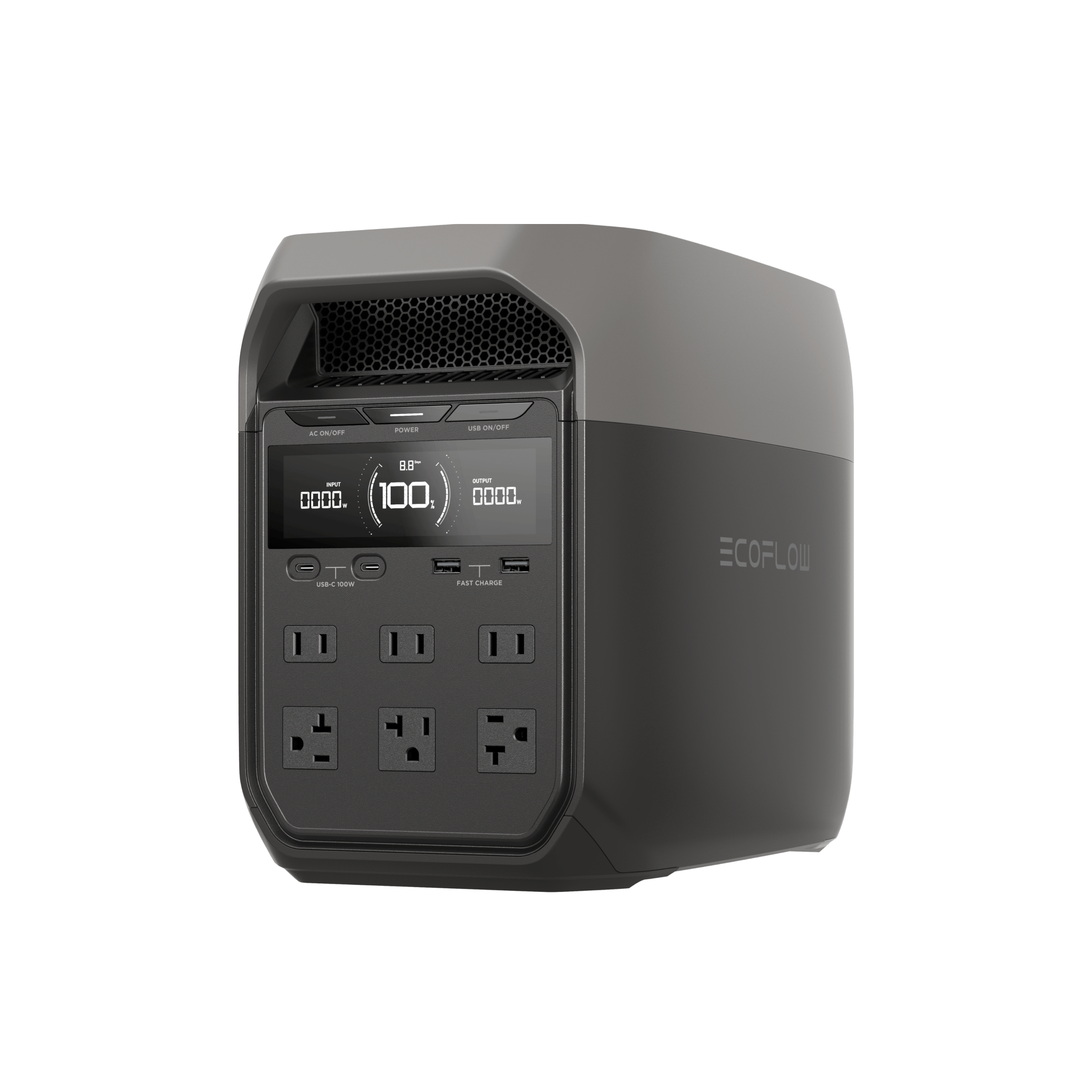
This is category-level market intelligence transcribed from the supplied PDF, not a verified supplier profile or quotation. Prices, margins, scores and regulatory statements are source-report estimates and claims. Confirm them for the exact product before investing. Companies mentioned below are prospects or comparisons, not necessarily the manufacturer of the featured product.
Quick answer
Read the complete market analysis, product specifications, pricing scenarios, compliance questions, channels and action plan below. This is market intelligence, not a supplier quotation.
Available sourcing details
- Discovery source
- Other
- Date discovered
- 2026-10-07T00:00:00.000Z
- Indicative price
- INR 32,000–45,000 target retail estimate · INR · Source-report target retail estimate; not a supplier quotation
- Intended markets
- India
Document reviewed
Important unknowns
Exact supplier, model, factory address, quotation and product-specific compliance are not established by a category market report.
Evidence links
- https://dir.indiamart.com/impcat/portable-power-station.html
- https://dir.indiamart.com/impcat/portable-power-station.html?biz=30
- https://sunlithenergy.com/bess-certifications-guide/
- https://sunlithenergy.com/bis-certification-lithium-ion-batteries-india/
- https://www.blueweaveconsulting.com/report/india-portable-power-station-market
- https://www.ecoflow.com/in/
- https://www.expertmarketresearch.com/reports/india-portable-generator-market
- https://www.grandviewresearch.com/industry-analysis/portable-power-station-market-report
- https://www.jackery.com/
- https://www.linkedin.com/pulse/what-certifications-required-bess-india-neeraj-kumar-singal-sjzxc
- https://www.moerdonstore.com/
- https://www.moerdonstore.com/blogs/news/top-10-portable-power-stations-india
- https://www.moerdonstore.com/collections/portable-power-station
- https://us.ecoflow.com/products/delta-3-portable-power-station
Product and market
Portable Power Stations: India Backup and Outdoor Market
This is category-level market intelligence transcribed from the supplied PDF, not a verified supplier profile or quotation. Prices, margins, scores and regulatory statements are source-report estimates and claims. Confirm them for the exact product before investing. Companies mentioned below are prospects or comparisons, not necessarily the manufacturer of the featured product.
Source consistency note: the overview reports 6/10, while the detailed scorecard reports 4.7/10. Both are retained; this unresolved difference is not an objective investment rating.
Full market intelligence
Market overview
india · Portable Power for Backup and Outdoor Use
Report date: 7 October 2026.
-
Opportunity score: 6/10 out of 10
-
Assessment: Emerging Opportunity overall
-
Market value and growth: USD 235.08 million (India portable generator market, 2025); no reliable standalone India portable power station value found growing 6.80% CAGR (India portable generator market, 2026-2035)
Executive Summary
India's portable power market is bifurcated: the legacy portable generator segment was valued at USD 235.08 million in 2025 and is forecast to reach USD 453.87 million by 2035 at 6.8% CAGR, while the newer lithium-based portable power station category has no reliable standalone India market value in the available evidence. Demand is driven by frequent power outages, remote work, camping and outdoor recreation, and smart-device proliferation. Retail pricing for portable power stations starts around INR 16,999, with wholesale quotes from INR 9,999, and BIS certification under the Compulsory Registration Scheme is mandatory for lithium batteries and power banks. The category is an emerging opportunity with strong structural tailwinds but thin published India-specific data, so entrants should validate demand through primary channel research before committing inventory.
Opportunity assessment — Emerging Opportunity India combines chronic grid reliability issues, a fast-growing middle class, and rising outdoor recreation demand, creating a genuine structural need for portable backup power. However, the absence of a credible standalone India portable power station market size and the mandatory BIS certification burden temper the near-term opportunity.
Decision in 60 Seconds
The figures below are source-report estimates or scenarios, not a quotation from the featured supplier. Confirm assumptions and actual costs before committing.
TEST India's portable power station demand is real but small and price-sensitive, and mandatory BIS/CRS certification plus lithium freight rules make a full launch risky before a paid pilot proves sell-through at a viable landed cost.
-
Best customer: Urban middle-class households in Tier 1-2 cities facing frequent outages, plus camping/road-trip and small-shop backup users
-
Best product: 500-999 Wh LiFePO4 portable power station with 230V AC output, 500-1000W inverter, BIS/CRS-compliant, solar-input capable
-
Best channel: Online marketplaces (Amazon.in, Flipkart) plus specialist solar/outdoor distributors and B2B portals (IndiaMART, TradeIndia)
-
Target retail price: INR 32,000-45,000 for a 500-999 Wh unit
-
Target landed cost: INR 18,000-24,000 per unit at 500-999 Wh
-
Expected gross margin: 25-35% at retail, 12-20% at distributor/wholesale
-
Entry budget: INR 25-40 lakh for a 300-500 unit pilot including certification, freight, duty and working capital
-
Time to market: 4-7 months including BIS/CRS registration, shipping and channel setup
-
Biggest obstacle: Mandatory BIS/CRS certification for lithium batteries and power banks, plus lithium-battery freight restrictions and price competition from established brands
-
Confidence in this call: Low
Opportunity Scorecard
4.7/10
Overall score
| Factor | Score | Why |
|---|---|---|
| Market demand | 6/10 | Frequent outages, rising outdoor/camping interest and remote work support demand, but India-specific portable power station revenue evidence is thin and the category competes with cheap inverters and diesel gensets. |
| Growth | 7/10 | Global forecasts range from 6.6% to 22.4% CAGR depending on source; India portable generator market is forecast at 6.8% CAGR, suggesting steady rather than explosive local growth. |
| Competition | 4/10 | EcoFlow, Jackery, Goal Zero and numerous IndiaMART/Amazon sellers already operate; local pricing starts around INR 10,000-17,000, squeezing new entrants. |
| Regulatory difficulty | 3/10 | BIS/CRS registration is mandatory for lithium batteries and power banks; containerized BESS rules are still evolving and non-compliance carries legal and safety risk. |
| Margin potential | 5/10 | Retail prices are visible and competitive; after duty, freight and certification amortization, gross margins are likely 25-35% at retail but thin at wholesale. |
| Import complexity | 4/10 | Lithium batteries face dangerous-goods freight rules, BIS port checks and possible customs scrutiny; no tariff or freight evidence was found in the research pack. |
| Local partner availability | 6/10 | IndiaMART and TradeIndia list multiple distributors and suppliers, but quality and exclusivity vary; named importers are mostly small trading firms. |
| Speed to market | 4/10 | BIS/CRS testing and registration, plus sea freight and channel listing, realistically take 4-7 months before meaningful sales. |
| Evidence confidence | 3/10 | Most market-size data is global or for portable generators, not India portable power stations; no India-specific tariff, freight or buyer-requirement evidence was provided. |
Attractive long-term category but weak evidence base and heavy compliance burden justify a paid pilot rather than a full launch.
Market Size & Growth
-
Market value (2025): USD 235.08 million (India portable generator market, 2025); no reliable standalone India portable power station value found
-
Growth rate: 6.80% CAGR (India portable generator market, 2026-2035)
-
Forecast (2035): USD 453.87 million (India portable generator market, 2035)
-
Confidence: LOW
Expert Market Research India portable generator data used as proxy; global portable power station estimates vary widely (USD 661.57M to USD 4.91B for
Basis
2025-2026) and no India-specific portable power station value was found in the evidence.
Demand Drivers
1 Frequent power outages and unreliable grid High Power outages are cited as a primary demand driver for portable power stations and generators across India, particularly in Tier II and III cities.
2 Rising middle-class income and urbanization High Growth in middle-class population and income makes portable backup power affordable, driving adoption for in-home backup and outdoor recreation.
3 Outdoor and camping recreation growth Medium Growing popularity of camping, travel, and outdoor activities is expanding demand for portable power stations for recreational use. 4 Smart device and consumer electronics proliferation Medium Smart homes, smart autos, and smart city investments require continuous connectivity, increasing demand for portable power to charge devices.
Trending Now
1 Shift from fuel generators to lithium power stations Accelerating Consumers are moving toward silent, eco-friendly, rechargeable portable power stations as alternatives to traditional fuel-powered generators. Signal: Retailers and B2B portals list 200W to 5000W portable power stations for home backup, camping, and emergencies.
2 Solar-integrated portable power stations Steady Solar power operation is a recognized product segment in India, appealing to off-grid and emergency backup users. Signal: BlueWeave segments the India market by Direct Power and Solar Power operation.
3 LiFePO4 battery chemistry adoption Accelerating LiFePO4 chemistry and advanced BMS are increasingly featured in products sold in India, offering longer cycle life and safety. Signal: EcoFlow DELTA 2 Lite with 950Wh LFP battery is listed by Indian suppliers.
4 BIS certification as a trust signal Accelerating Following thermal runaway incidents, BIS certification is becoming a visible purchase criterion for Indian buyers of lithium power products. Signal: Buying guides emphasize verifying the BIS Standard Mark and 7-digit registration number.
Seasonality
No seasonality data was found in the evidence. Demand appears driven by power reliability and outdoor activity patterns rather than a documented
Planning note
seasonal cycle.
Consumer Insights
-
Typical buyer: Homeowners, remote workers, campers, travelers, photographers, and small business owners seeking silent, emission-free backup power.
-
Demographics: Middle-class urban and Tier II/III city residents; outdoor enthusiasts; emergency preparedness buyers.
-
Price sensitivity: High
-
Sensitivity note: Wholesale quotes start as low as INR 9,999 and retail from INR 16,999, indicating a competitive, price-conscious market with a wide range of options.
-
What they value: Reliability during outages, Silent and emission-free operation, Portability and lightweight design, Safety and certification
-
Where they buy: Online marketplaces (Amazon.in, Flipkart), B2B portals (IndiaMART, TradeIndia), Specialty electronics retailers (Croma), Brand-owned D2C websites
-
Purchase drivers: Power outage frequency, Outdoor recreation needs, Smart device charging requirements, Environmental concerns and fuel independence
Market Channels
| Channel | Fit | MargNiontes |
|---|---|---|
| Online marketplaces | Strong | Amazon.in and similar platforms offer wide selection and price comparison; listings increasingly filtered for BIS compliance. List BIS-certified products with clear capacity and output specs; leverage marketplace advertising. |
| B2B wholesale portals | Strong | IndiaMART and TradeIndia connect suppliers with bulk buyers; many suppliers offer competitive pricing and bulk deals. Register as a verified supplier, respond to bulk inquiries, and offer tiered pricing. |
| Specialty electronics retail | Moderate | Retailers like Croma are increasingly filtering for CRS compliance, providing a trusted offline channel. Partner with retail chains; ensure product meets BIS and retail packaging requirements. |
| Direct-to-consumer (D2C) | Moderate | Brands like EcoFlow and Jackery have D2C presence; building brand trust is essential. Launch a localized website with after-sales support and warranty. |
Competitive Landscape
Market leaders
| Company | Position | Strength |
|---|---|---|
| EcoFlow | Global portable power station leader with presence in India | LiFePO4 battery technology, expandable capacity, strong brand recognition |
| Jackery | Global leader known for Explorer series | Strong distribution networks and brand trust in outdoor segment |
| Goal Zero | Well-known brand in North America and Europe | Solar integration, durable designs, distribution alliances |
Competing source markets
-
Origin: Their advantage
-
China: Large-scale manufacturing, competitive pricing, OEM/ODM capability
-
India: Local manufacturing, understanding of domestic market, potential cost advantages
-
Global brands (US, Europe): Brand equity, advanced technology, premium positioning
-
Origin: Their advantage
Where you can win Differentiate through BIS-certified safety, localized after-sales support, and products tailored to Indian power outage patterns and outdoor conditions.
Barriers to entry
| Barrier | Severity | How to overcome |
|---|---|---|
| Mandatory BIS certification for lithium batteries and power banks | High | Engage BIS-recognized labs early, budget for testing and factory audits, and ensure ongoing compliance. |
| Price-sensitive market with low-cost competitors | Medium | Focus on value proposition, durability, and certification as trust signals; optimize supply chain for cost. |
| Lack of reliable market data for India | Medium | Conduct primary research through channel partners and pilot sales before scaling. |
Gaps in the market
(cid:127) Limited India-specific market data and consumer research
(cid:127) Few affordable high-capacity options for price-sensitive buyers
(cid:127) Underdeveloped rural distribution networks
Pricing
The figures below are source-report estimates or scenarios, not a quotation from the featured supplier. Confirm assumptions and actual costs before committing.
-
Retail price range: Starting from INR 16,999 for portable power stations (Moerdon); range extends to high-capacity units
-
Wholesale expectation: Starting from INR 9,999 (Aman Enterprises), INR 10,000 (Hippostores), INR 13,750 (Integrated Solar Technologies) per IndiaMART listings
-
Margin pressure: High
-
Notes: Pricing is highly competitive; BIS certification adds cost but is non-negotiable for legal sale.
Price tiers
| Tier | Range | Note |
|---|---|---|
| Entry-level | n 9,999 - n 16,999 | Low-capacity units (under 500Wh) for basic device charging and camping. |
| Mid-range | n n 17,000 - 50,000 | 500Wh to 1500Wh units for home backup and extended outdoor use. |
| High-capacity | n 50,000+ | 1500Wh+ units for whole-home backup and professional applications. |
Regulatory Requirements
The following preserves the source report's regulatory analysis, which has not been independently validated for this exact product. Requirements depend on classification, intended use and current rules. Confirm applicability with the destination authority or a qualified adviser.
| Requirement | Status | Authority | Detail |
|---|---|---|---|
| BIS certification under Compulsory Registration Scheme (CRS) | Mandatory | Bureau of Indian Standards (BIS) | Mandatory for all battery storage systems sold or imported in India, including lithium-ion batteries and power banks; compliance with IS 13252 (Part 1):2010 for power banks. |
| IS 17092:2019 compliance for containerized BESS | Mandatory | Central Electricity Authority (CEA) | Requires compliance with IS 17092:2019 and container-level safety specifications including explosion-proof design and fire suppression. |
| UN 38.3 transport testing | Mandatory | International Air Transport Association (IATA) / modal authorities | Required for safe transport of lithium batteries; often a prerequisite for import. |
| Requirement | Status | Authority | Detail |
|---|---|---|---|
| IEC 62133-2 safety standard | Recommended | International Electrotechnical Commission (IEC) | Common standard for portable lithium battery certification; BIS aligns many norms with IEC. |
Import & Logistics
-
Suggested HS code: 8507.60 (lithium-ion accumulators) or 8504.40 (static converters) depending on product configuration
-
Top source countries: China, India (domestic manufacturing), Korea
-
Shipping notes: Lithium batteries are classified as dangerous goods; air and sea freight require UN 38.3 test reports and compliant packaging.
Buyer Expectations
-
Expectation: Importance
-
BIS certification and safety compliance Legal requirement and trust signal; buyers verify registration numbers.: Must-have
-
Reliable capacity and output specifications Buyers compare Wh capacity and W output for intended use cases.: Must-have
-
Portability and lightweight design Important for outdoor and camping applications.: Nice to have
-
After-sales support and warranty Builds confidence in a market with many unbranded options.: Nice to have
Risks
1 Regulatory non-compliance leading to fines or product recalls High Obtain BIS certification before import or sale; maintain ongoing compliance audits.
2 Intense price competition eroding margins High Differentiate through quality, certification, and brand; optimize supply chain.
3 Lack of reliable market data leading to overstock or understock Medium Conduct primary research and pilot launches before scaling. 4 Supply chain disruptions for lithium cells Medium Diversify suppliers and maintain buffer inventory.
Opportunities
1 Growing demand for silent, emission-free backup power Consumers increasingly prefer portable power stations over noisy, fuel-based generators. How to capture: Position products as clean, silent alternatives; target urban households and outdoor enthusiasts.
2 Solar-integrated portable power stations India's renewable energy push and off-grid needs create demand for solar-ready solutions. How to capture: Offer bundles with solar panels; highlight energy independence.
3 BIS certification as a competitive advantage Uncertified imports face legal risk; certified products build trust. How to capture: Obtain BIS certification early and market it prominently.
4 Tier II and III city expansion Rapid urbanization and power outages in these cities drive demand. How to capture: Develop distribution networks and affordable product lines for these markets.
Market Entry Strategy
-
Recommended approach: Enter with a focused range of BIS-certified portable power stations targeting urban households and outdoor enthusiasts, leveraging online marketplaces and B2B portals for distribution.
-
Timeline: 6-12 months to certification and market entry
First steps
(cid:127) Conduct primary market research to validate demand and pricing
(cid:127) Identify and engage BIS-recognized testing labs
(cid:127) Secure supply chain partnerships with certified manufacturers
(cid:127) Launch pilot sales on Amazon.in and IndiaMART
Trade Show Tips
(cid:127) Attend renewable energy and electronics trade shows in India — Connect with distributors, retailers, and potential partners.
(cid:127) Highlight BIS certification and safety features — Differentiate from uncertified competitors and build trust.
(cid:127) Demonstrate product use cases for Indian power conditions — Show relevance to frequent outages and outdoor activities.
Action Brief
Do now Verify BIS certification requirements and engage a testing lab Owner: Compliance/Regulatory
This week Conduct primary research on India portable power station demand and pricing Owner: Market Research
This month Identify and contact potential distributors on IndiaMART and TradeIndia Owner: Business Development
This month Develop a product roadmap with BIS-certified SKUs for India Owner: Product Management
Key Takeaways
1 India's portable generator market is valued at USD 235.08 million in 2025, growing at 6.8% CAGR to USD 453.87 million by 2035; portable power station data is not separately available. 2 Demand is driven by power outages, rising middle-class income, outdoor recreation, and smart device proliferation. 3 BIS certification under CRS is mandatory for lithium batteries and power banks, and is a key trust signal. 4 Retail prices start at 16,999, with wholesale quotes from 9,999, indicating a price-sensitive market. 5 The category is an emerging opportunity with strong tailwinds but requires primary research and regulatory compliance before entry.
Landed Cost Model
The figures below are source-report estimates or scenarios, not a quotation from the featured supplier. Confirm assumptions and actual costs before committing.
Currency: INR. Per unit: one 500-999 Wh LiFePO4 portable power station with 230V AC output.
| Cost line | Best | Base | Worst | Note |
|---|
| Cost line | Best | Base | Worst | Note |
|---|---|---|---|---|
| FOB China factory price | 14,000 | 17,000 | 21,000 | Assumption based on Global Sources wholesale listings; not verified for India-specific BIS-compliant units. |
| Ocean freight and insurance | 1,200 | 2,000 | 3,200 | Assumption; lithium batteries may require special handling and higher freight. No freight evidence found. |
| Basic customs duty | 0 | 2,550 | 4,200 | Assumption at 0-20% of assessable value; actual HS classification and rate must be verified with a customs broker. |
| IGST (input, creditable) | 0 | 0 | 0 | Assumed creditable for a GST-registered importer; cash-flow impact only. |
| BIS/CRS certification amortization | 500 | 1,200 | 2,500 | Assumption spreading certification cost over 300-500 units; actual BIS cost and timeline not in evidence. |
| Port, CHA and inland transport | 800 | 1,500 | 2,500 | Assumption for Indian port clearance and delivery to warehouse. |
| Warranty and returns provision | 500 | 1,000 | 2,000 | Assumption for lithium battery warranty risk in Indian climate. |
| Warehousing and last-mile | 400 | 800 | 1,500 | Assumption for e-commerce and distributor fulfilment. |
| True landed cost (base case) | INR 26,050 | per unit | ||
| Distributor sale price | INR 32,000-36,000 | |||
| Retail price | INR 38,000-45,000 | |||
| Distributor margin | 12-18% | |||
| Importer gross margin | 25-35% | at retail, 15-22% | at wholesale | |
| Contribution per unit | INR 6,000-9,000 | at retail |
Assumptions behind these figures
(cid:127) FOB price is an assumption based on wholesale listings, not a confirmed quote.
(cid:127) Duty rate is an assumption; HS classification for portable power stations must be confirmed.
(cid:127) BIS/CRS certification cost and timeline are assumptions; no India-specific cost evidence was found.
(cid:127) Freight is an assumption; lithium battery dangerous-goods surcharges may apply.
(cid:127) All figures are per unit and can be rescaled; they exclude marketing spend and fixed overhead.
Break-Even Analysis
The figures below are source-report estimates or scenarios, not a quotation from the featured supplier. Confirm assumptions and actual costs before committing.
-
Setup cost: Amount
-
BIS/CRS certification and testing INR 3,00,000-6,00,000:
-
Pilot inventory (300 units at base landed cost) INR 78,00,000:
-
Channel listing, marketing and samples INR 3,00,000-5,00,000:
-
Working capital and contingency INR 5,00,000-8,00,000:
-
Total setup cost INR 89,00,000-97,00,000 for a 300-unit pilot:
-
Setup cost: Amount
-
Contribution per unit INR 6,000-9,000:
-
Break-even volume Approximately 1,100-1,600 units to recover setup costs:
-
Conservative monthly sales 80-150 units:
-
Estimated time to break even 8-18 months:
Assumptions
(cid:127) Contribution per unit is after landed cost and before fixed overhead.
(cid:127) Sales estimate is conservative given competition and price sensitivity.
(cid:127) Certification cost is an assumption; actual BIS fees may differ.
(cid:127) No marketing spend beyond pilot budget is included.
Ideal Product Specification
Source this Source a 500-999 Wh LiFePO4 portable power station with 230V AC output, BIS/CRS certification and solar input for India.
| Attribute | Requirement | Why it matters |
|---|---|---|
| Capacity | 500-999 Wh | Matches the fastest-growing global capacity band and Indian household backup needs. |
| Battery chemistry | LiFePO4 | Longer cycle life and better thermal safety than NMC for Indian conditions. |
| AC output | 230V, 50Hz, pure sine wave | India grid standard; pure sine wave protects appliances. |
| Inverter rating | 500-1000W continuous | Enough for fans, lights, laptops, routers and small appliances. |
| Certification | BIS/CRS registration and IS 13252 or applicable standard | Mandatory for lithium batteries and power banks in India. |
| Solar input | MPPT, 100-200W panel compatible | Appeals to off-grid and outage-prone users. |
| Weight | Under 12 kg | Portability is a core purchase driver. |
| Warranty | 2 years minimum | Builds trust in a market wary of lithium safety. |
| Packaging Target FOB price | English and Hindi labelling with BIS mark USD 170-210 per unit | Regulatory and consumer trust requirement. |
| Target MOQ | 300-500 units |
Deal breakers
(cid:127) No BIS/CRS certification or refusal to support certification
(cid:127) NMC chemistry without robust BMS and thermal protection
(cid:127) No 230V/50Hz AC output
(cid:127) No UN 38.3 test report for lithium battery transport
Questions to Ask a Supplier
-
1: Do you already hold BIS/CRS registration for this model in India? Why: Without it, import and sale are legally blocked. Good answer: Yes, with registration number and test reports available.
-
2: Can you provide UN 38.3 test reports and MSDS for the battery? Why: Required for lithium battery freight and customs. Good answer: Yes, current UN 38.3 and MSDS for the exact cell and pack.
-
3: What is the cell brand and chemistry? Why: Cell quality drives safety, cycle life and warranty risk. Good answer: Tier-1 LiFePO4 cells with traceable brand and batch.
-
4: What is your warranty policy and defect rate? Why: Lithium warranty claims can destroy margins. Good answer: 2-year warranty, under 2% defect rate, spare parts support.
-
5: Can you customize to 230V/50Hz and Indian plug types? Why: Product must work on Indian grid. Good answer: Yes, with sample verification.
-
6: What is the FOB price at 300, 500 and 1000 units? Why: Determines landed cost and break-even. Good answer: Clear tiered pricing with no hidden tooling fees.
-
What is the lead time from PO to port? Why: Affects cash cycle and seasonality. Good answer: 30-45 days for repeat orders.
-
8: Do you support OEM branding and packaging? Why: Brand building and marketplace differentiation. Good answer: Yes, with MOQ and artwork lead time stated.
-
9: Have you exported to India before? Why: Experience with Indian customs and BIS reduces risk. Good answer: Yes, with references or shipment records.
Companies Worth Approaching
These are prospects or comparison companies named in the source report, not confirmed partners, authorised distributors or endorsements. Verify their current scope before contacting them.
| Company | Type | Why they fit | Who to ask for | Priority |
|---|---|---|---|---|
| EcoFlow https://www.ecoflow.com/in/ | Brand and distributor | Already sells portable power stations in India including DELTA 2 Lite. | Partnership or competitive benchmark | A |
| Jackery https://www.jackery.com/ | Brand | Global leader in portable power stations with India presence. | Competitive benchmark or distribution partner | A |
| Moerdon https://www.moerdonstore.com/ | Online retailer | Sells portable power stations in India starting at INR 16,999. | Retail listing partner | B |
| Pantagone Technologies India Private Limited https://dir.indiamart.com/impcat/portable-power-station.html | Supplier and distributor | Listed on IndiaMART as a portable power station supplier. | Distribution partner | B |
| Allied Safety Equipments Private Limited https://dir.indiamart.com/impcat/portable-power-station.html | Supplier and distributor | Listed on IndiaMART for portable power stations and safety equipment. | Distribution partner | B |
| Company | Type | Why they fit | Who to ask for | Priority |
|---|---|---|---|---|
| Himalayan Hybrid Power Technologies Private Limited https://dir.indiamart.com/impcat/portable-power-station.html | Supplier and distributor | Listed on IndiaMART for portable power stations. | Distribution partner | C |
| Aman Enterprises https://dir.indiamart.com/impcat/portable-power-station.html | Wholesaler | Listed on IndiaMART with portable power station starting at INR 9,999. | Wholesale channel | C |
| Hippostores Technology Private Limited https://dir.indiamart.com/impcat/portable-power-station.html | Wholesaler | Listed on IndiaMART with portable power station starting at INR 10,000. | Wholesale channel | C |
Product-Market Fit by Segment
| Segment | Their need | Fit | Price sensitivity | Sales difficulty |
|---|---|---|---|---|
| Urban household backup | Reliable silent backup for outages | Strong | High | Medium |
| Camping and outdoor | Portable power for devices and lights | Moderate | Medium | Medium |
| Small shop and office backup | Power for POS, routers, lights | Strong | Medium | Medium |
| Off-grid and solar users | Solar-integrated storage | Moderate | High | High |
| Emergency and disaster relief | Portable power for critical devices | Moderate | Low | High |
Who Should NOT Enter This Market
Small importer with less than INR 20 lakh working capital
Certification, inventory and channel costs exceed this budget before any sales.
Trader unwilling to manage BIS/CRS compliance
Uncertified lithium power stations carry legal risk and are increasingly filtered by marketplaces.
Business expecting quick high-volume returns
Category is still niche in India and price-sensitive; break-even takes 8-18 months.
Seller targeting only premium outdoor enthusiasts
India's outdoor recreation market is smaller than North America or Europe; volume is limited.
Validate Before You Invest
Actual BIS/CRS certification cost and timeline for this product How: Contact BIS-recognized labs and a certification consultant for a written quote. Why: Determines entry budget and time to market.
Correct HS code and applicable customs duty How: Engage a customs broker and check Indian Customs Tariff. Why: Duty directly affects landed cost and pricing.
Real freight cost for lithium batteries from China to India How: Get quotes from freight forwarders experienced in dangerous goods. Why: Freight can swing landed cost by 10-15%.
Actual sell-through rate at target price on Amazon.in and Flipkart How: Run a small paid listing test or pre-order campaign. Why: Validates demand before committing inventory.
Warranty and return rates in Indian climate How: Pilot 50-100 units with a warranty tracking process. Why: Warranty cost can erase margins.
What We Know and What We Do Not
Known (cid:127) BIS/CRS certification is mandatory for lithium batteries and power banks in India. (cid:127) Portable power stations are already sold in India through online and B2B channels. (cid:127) Global demand for portable power stations is growing.
Likely (cid:127) Price competition will be intense at the lower end. (cid:127) Lithium battery freight will be more expensive and slower than standard cargo. (cid:127) Indian consumers will prioritize price and brand trust over premium features.
Unknown (cid:127) Actual India portable power station market size and growth rate. (cid:127) Exact customs duty and HS classification. (cid:127) Real BIS/CRS certification cost and timeline. (cid:127) Actual sell-through at target price points. (cid:127) Warranty and return rates in Indian conditions.
Needs verification
(cid:127) HS code and duty rate from a customs broker. (cid:127) BIS/CRS cost and timeline from a certification consultant. (cid:127) Freight quotes for lithium batteries from China to India. (cid:127) Paid demand test on Amazon.in or Flipkart.
Evidence Quality
A government or regulator · B industry body · C research firm · D trade observation · E estimate or inference
Overall evidence grade: C Market-size data is mostly global and inconsistent; India-specific regulatory and trade evidence is present but incomplete; no tariff or freight evidence was found.
| Claim | Grade | Basis |
|---|---|---|
| Global portable power station market is growing at 6.6-22.4% CAGR | C | Multiple research firms with widely differing forecasts. |
| India portable generator market was USD 235.08 million in 2025 | C | Expert Market Research report. |
| BIS/CRS certification is mandatory for lithium batteries and power banks in India | B | Industry guides and BIS references; not a direct government document in the pack. |
| Portable power stations are sold in India from INR 9,999 to INR 16,999 and above | D | IndiaMART and Moerdon retail listings. |
| EcoFlow, Jackery and Goal Zero are active in the category | D | Company websites and marketplace listings. |
| Claim | Grade | Basis |
|---|---|---|
| Lithium batteries require UN 38.3 testing for transport | B | Industry certification guides. |
| India portable power station demand is driven by outages, remote work and camping | C | BlueWeave and retailer commentary. |
30 / 60 / 90 Day Plan
0-30 days Validate compliance and demand (cid:127) Engage a BIS/CRS certification consultant and get a written cost and timeline quote. (cid:127) Confirm HS code and duty rate with a customs broker. (cid:127) Request UN 38.3 and MSDS from 3-5 Chinese suppliers. (cid:127) Run a small paid demand test or pre-order page for a 500-999 Wh unit at INR 38,000-45,000. 31-60 days Lock supply and certification (cid:127) Select a supplier with BIS/CRS support and LiFePO4 cells. (cid:127) Place a sample order and verify 230V/50Hz output and build quality. (cid:127) Initiate BIS/CRS registration. (cid:127) Get freight quotes for lithium batteries and finalize landed cost. 61-90 days Pilot launch (cid:127) Import 300-500 units after certification is granted. (cid:127) List on Amazon.in, Flipkart and IndiaMART with BIS mark visible. (cid:127) Appoint 2-3 distributors in Tier 1-2 cities. (cid:127) Track sell-through, returns and warranty claims weekly.
Go / No-Go trigger Sell at least 150 units within 90 days of listing at a contribution margin above INR 6,000 per unit, with return rate below 5%.
Alternative Markets to Consider
| Market | Why consider it | Versus this market |
|---|---|---|
| United States | Largest and most mature portable power station market with strong outdoor and backup demand. | Easier |
| Germany | Strong outdoor culture, high spending power and renewable energy adoption. | Easier |
| Australia | Outdoor lifestyle and off-grid demand, though certification requirements apply. | Similar |
| United Arab Emirates | High income, outdoor use and backup needs, but smaller population. | Similar |
Sources
-
Title: URL
-
India Portable Generator Market Size & Share | Report 2035: https://www.expertmarketresearch.com/reports/india-portable-generator-market
-
India Portable Power Station Market 2028 Share, Growth & Forecast: https://www.blueweaveconsulting.com/report/india-portable-power-station-market
-
Top 10 Portable Power Stations in India (2026): https://www.moerdonstore.com/blogs/news/top-10-portable-power-stations-india
-
Title: URL
-
Buy Portable Power Station in India at Best Price: https://www.moerdonstore.com/collections/portable-power-station
-
Portable Power Station - Lithium Portable Power Station Latest: https://dir.indiamart.com/impcat/portable-power-station.html
-
Portable Power Station Wholesalers & Distributors in India: https://dir.indiamart.com/impcat/portable-power-station.html?biz=30
-
What Certifications are required for BESS in India?: https://www.linkedin.com/pulse/what-certifications-required-bess-india-neeraj-kumar-singal-sjzxc
-
BIS Certification for Lithium-Ion Batteries in India (2025 Guide): https://sunlithenergy.com/bis-certification-lithium-ion-batteries-india/
-
BESS Certifications: 2026 Compliance Guide & Checklist: https://sunlithenergy.com/bess-certifications-guide/
-
Portable Power Station Market Size, Share Report 2026-2033: https://www.grandviewresearch.com/industry-analysis/portable-power-station-market-report
-
This report is for informational purposes only and does not constitute should conduct their own due diligence. No warranty is made as to the: investment or legal advice. Market data is sourced from third-party reports and may vary; readers accuracy or completeness of the information.
-
Who is behind ChinaConnect247? Operated by StructuredLayer — StructuredLayer builds connect records, documents, software, approvals and reporting. approach to supplier intelligence, fair contacts and Get in touch Email: inquiry@chinaconnect247.com WhatsApp: +971 52 577 8897 WeChat: chinaconnect247 Web: www.chinaconnect247.com · www.structuredlayer.com We accept Alipay, crypto, PayPal, bank transfer and Skrill.: and operates controlled business workflows that ChinaConnect247 applies that evidence-aware sourcing follow-up. Scan to connect on WeChat
| ChinaConnect247 | chinaconnect247.com | Generated | October 7, 2026 | · | For: | india | — | Portable | Power | for | Outdoor | Backup | Use | and |
|---|
Sources and evidence
- Source-report reference
- Source-report reference
- Source-report reference
- Source-report reference
- Source-report reference
- Source-report reference
- Source-report reference
- Source-report reference
- Source-report reference
- Source-report reference
- Source-report reference
- Source-report reference
- Source-report reference
- Product image source
Keep the context with the contact.
Save supplier cards alongside products, quotes, questions, samples, and the next action.